

“Sakitsu Settlement in Amakusa” is a small fishing village located in Kawauura-machi, Amakusa City, Kumamoto Prefecture. During the period of religious persecution, Buddhism, Shinto, and Christianity coexisted, fostering a unique form of faith specific to fishing villages. As a place where “Sakitsu Settlement in Amakusa” is included as a component site, the “Hidden Christian Sites in the Nagasaki Region and Amakusa” was registered as a World Cultural Heritage site in July 2018.

This is an eternal paradise, where the tranquil sea tells the memories of prayer.
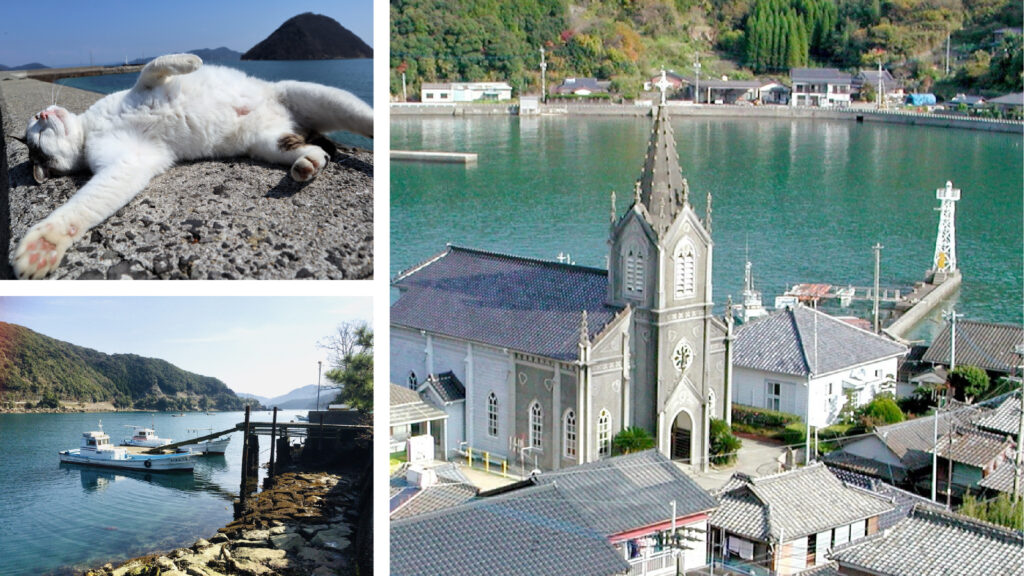
A Form of Faith Born from Life in a Fishing Village
In Sakitsu, missionary work began in 1569 with the arrival of the Jesuit missionary Almeida, and it is said that most of the villagers became Christians. A “collegio” for training missionaries was established in a neighboring village, and even the Tensho Embassy to Europe studied there, indicating that Sakitsu was recorded as an important center of faith at the time. Even after the ban on Christianity in 1614, many “hidden Christians” in Sakitsu secretly continued to practice their faith. After the Shimabara Rebellion, they outwardly belonged to temples and shrines, but every year, villagers were forced to trample on images of Christ and the Virgin Mary in the “e-fumi” ceremony held at the village headman’s house. Nevertheless, the religious organization survived, centered around leaders called “mizukata,” and rituals such as baptism and festivals were passed down. Sakitsu has long been a fishing village that has made its living from fishing, and this way of life continued even during the period of Christianity’s prohibition. The hidden Christians worshipped Deus as the god of abundant fishing, and secretly carried “devotional objects” in which they saw the patterns on abalone and pen shell shells as the Virgin Mary, fostering a unique religious culture intertwined with the life of fishing villages.
Living with Sakitsu Church, a Symbol of the Revival of Faith
The hidden Christians of Sakitsu secretly maintained their faith while outwardly living as followers of Buddhism and Shintoism to avoid detection. However, in 1804, their unique religious practices led to the discovery of their existence, and the following year, many residents, including those from surrounding villages, were arrested. This large-scale crackdown is known as the “Amakusa Collapse.” After Christianity was legalized in 1873, the hidden Christians returned to Catholicism and first built a wooden church below Suwa Shrine. In 1934, Sakitsu Church was built on the site of the former village headman’s residence where the practice of trampling on religious images once took place. Designed by Yosuke Tetsukawa, this tatami-floored church has become a symbol of the revival of faith after a long history of hiding.
Sakitsu Church: A sacred place of devout prayer that remains unchanged to this day.
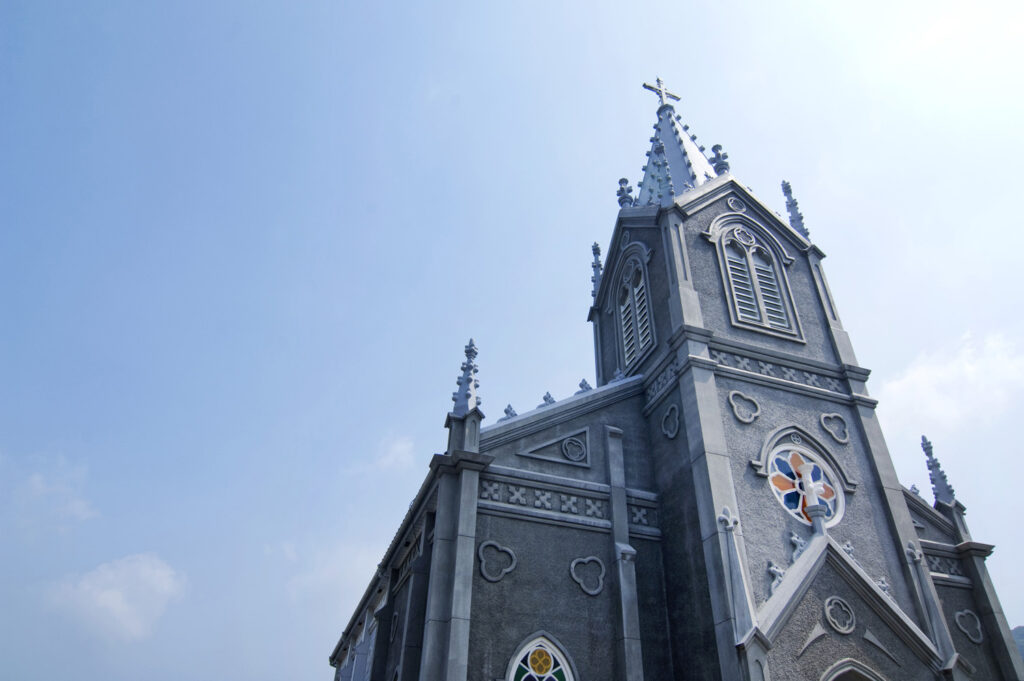
In 1934, the current Sakitsu Church was built. On the site of the village headman’s residence, where the practice of “e-fumi” (trampling on Christian images) was carried out to persecute Christians, Father Halbe had a strong desire to “build a church that would be a symbol of resurrection.” The church was completed with the priest’s personal funds, donations from believers, and the labor of believers, and it continues to be preserved today as a symbol of the revival of faith in the village. The interior of the Gothic-style church, with a cross on its spire, is covered with tatami mats, which is rare in Japan, and it is said that the altar was placed in the spot where “e-fumi” was performed. It remains a sacred place where devout people continue to offer their devout prayers.
Sakitsu Suwa Shrine: The guardian deity of Sakitsu that transcends religion.
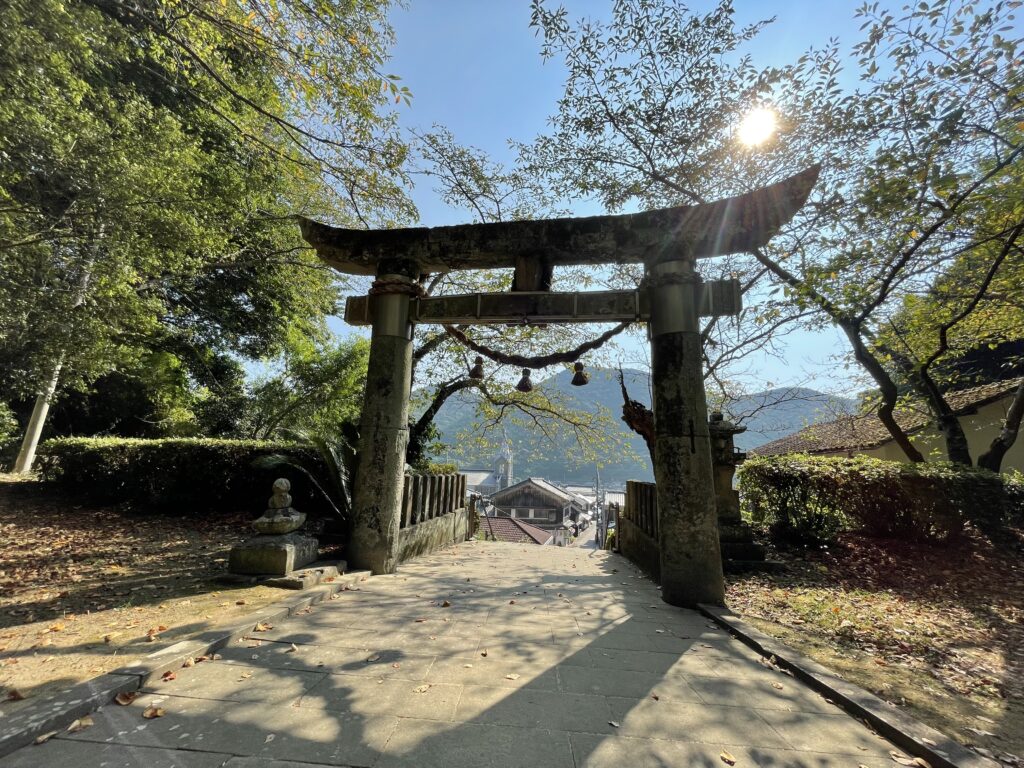
Sakitsu Suwa Shrine is the village’s guardian deity, founded in 1647 during the period of religious persecution, for the purpose of praying for a bountiful catch and safety at sea. At that time, the villagers, who outwardly practiced Buddhism or were Christians who became parishioners of the shrine, would visit the shrine and secretly chant “Amendeus,” continuing their faith while preserving and passing down baptisms and orasho (words of prayer). It is also known as the place designated for hidden Christians to hand over their religious items during the Amakusa Collapse of 1805. The torii gate, built shortly after the shrine’s founding, still stands today and is the oldest torii gate in Amakusa City.
Sakitsu Guidance Center, Amakusa City: Providing information and history about the Sakitsu settlement.
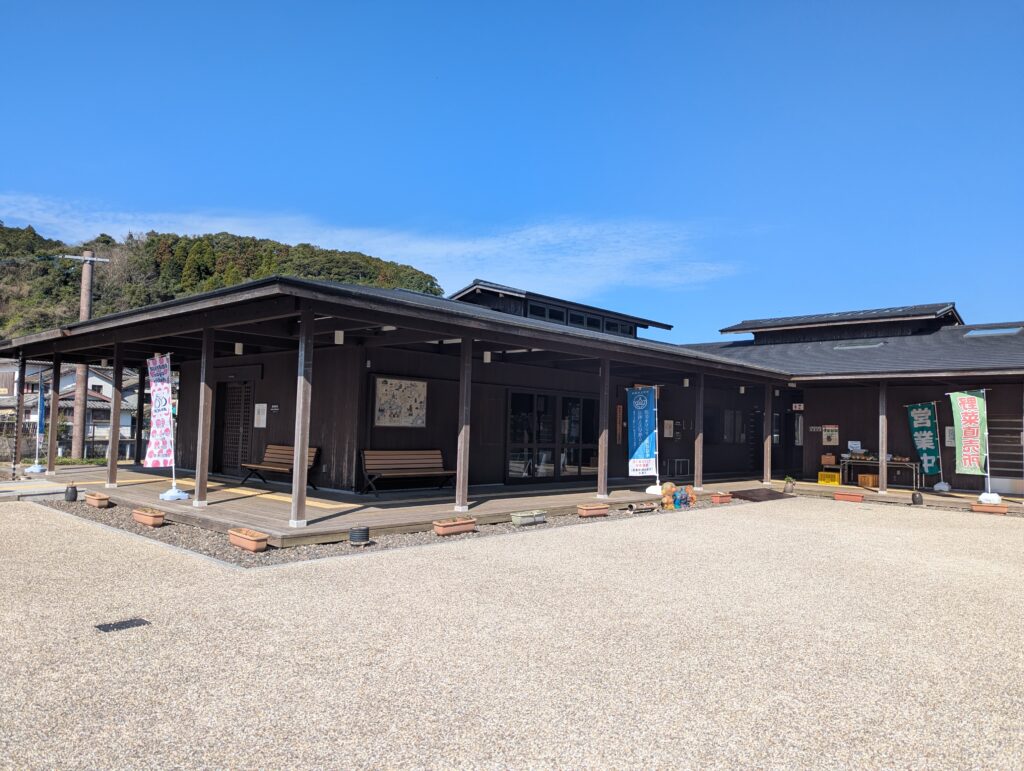
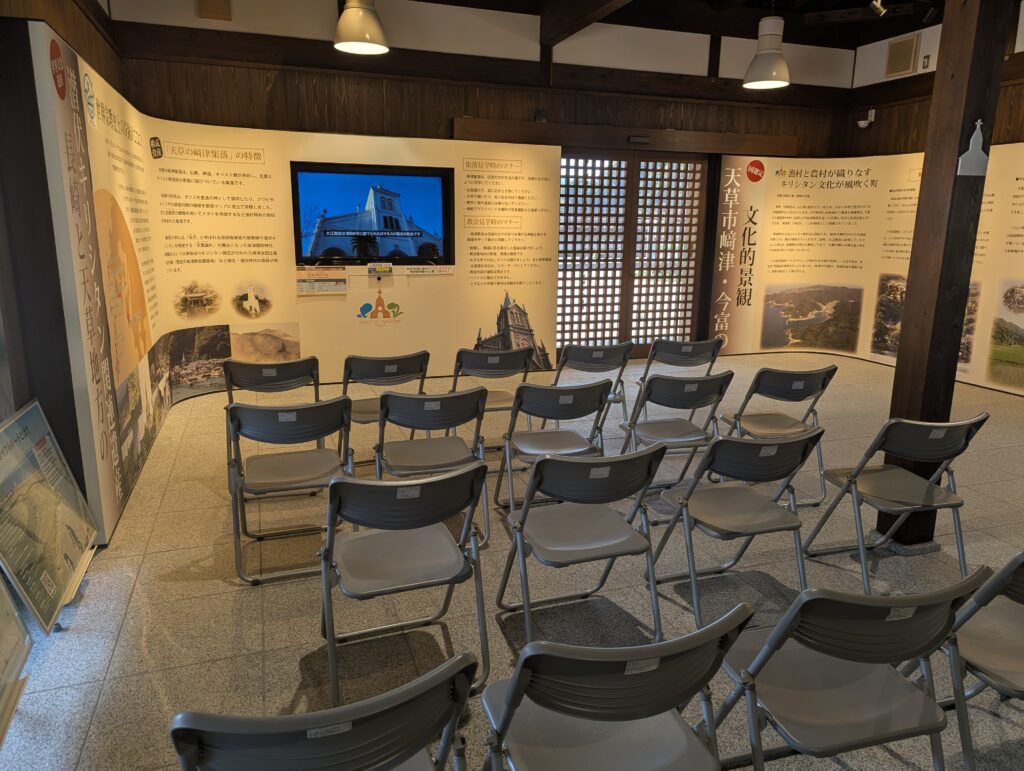
The Amakusa City Sakitsu Guidance Center is a facility that provides an easy-to-understand introduction to the history of the Sakitsu settlement, a World Cultural Heritage site, and the culture of the hidden Christians. Through videos and exhibits, you can learn about the origins of the settlement and the history of faith, making it a recommended base for exploring Sakitsu. If you wish to visit Sakitsu Church, please be aware that it may not be open due to church events, so please be sure to make a reservation with the Amakusa City Sakitsu Guidance Center. We ask for your cooperation in the preservation and protection of Sakitsu Church as a cultural property.
