
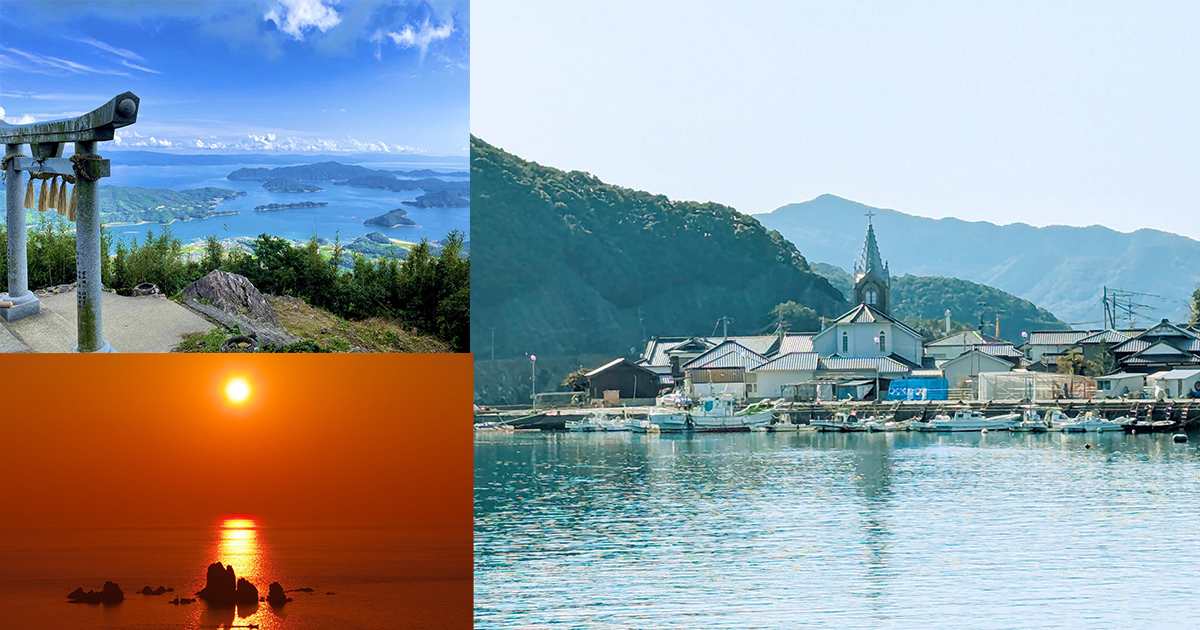
In 1934, Unzen National Park was designated as one of Japan’s first national parks. In 1956, the Amakusa region was added, creating Unzen-Amakusa National Park. The greatest attraction of Unzen-Amakusa National Park is the marine landscape of Amakusa, woven together by Mount Unzen towering over the Ariake Sea, the sparkling blue ocean, and 120 islands of varying sizes. Along the east coast of Kamishima Island, the “Kankai Alps” offer a spectacular view of sheer ridges plunging into the sea. The west coast, with its beautiful sunsets sinking below the horizon, is dotted with tombolos and sea cliffs, creating a scenic landscape of strangely shaped rocks and boulders. Let us introduce you to the unique charm of Unzen-Amakusa National Park.

Myokenura
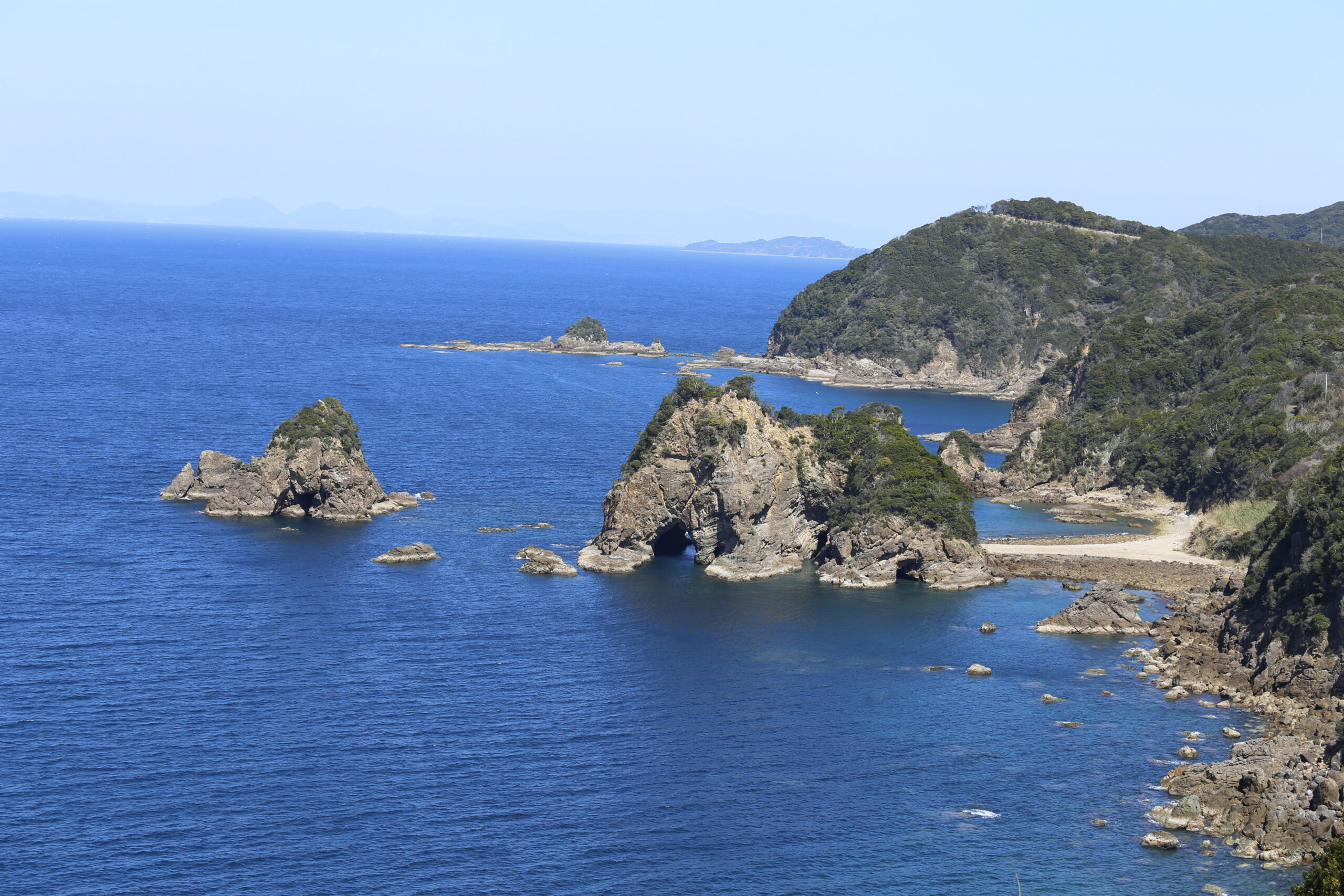
This nationally designated scenic spot and natural monument boasts a breathtaking coastal landscape. The rock formations, sculpted over countless years by rough waves, are awe-inspiring, allowing you to experience the raw power of nature up close. The sculptural beauty of the rocks, a tapestry of sea cliffs and columnar jointing, is a landscape unique to Unzen-Amakusa National Park (AMAKUSA).
Location: Shimoda Minami, Amakusa-machi, Amakusa City, Kumamoto Prefecture
Kikaigaura Observatory
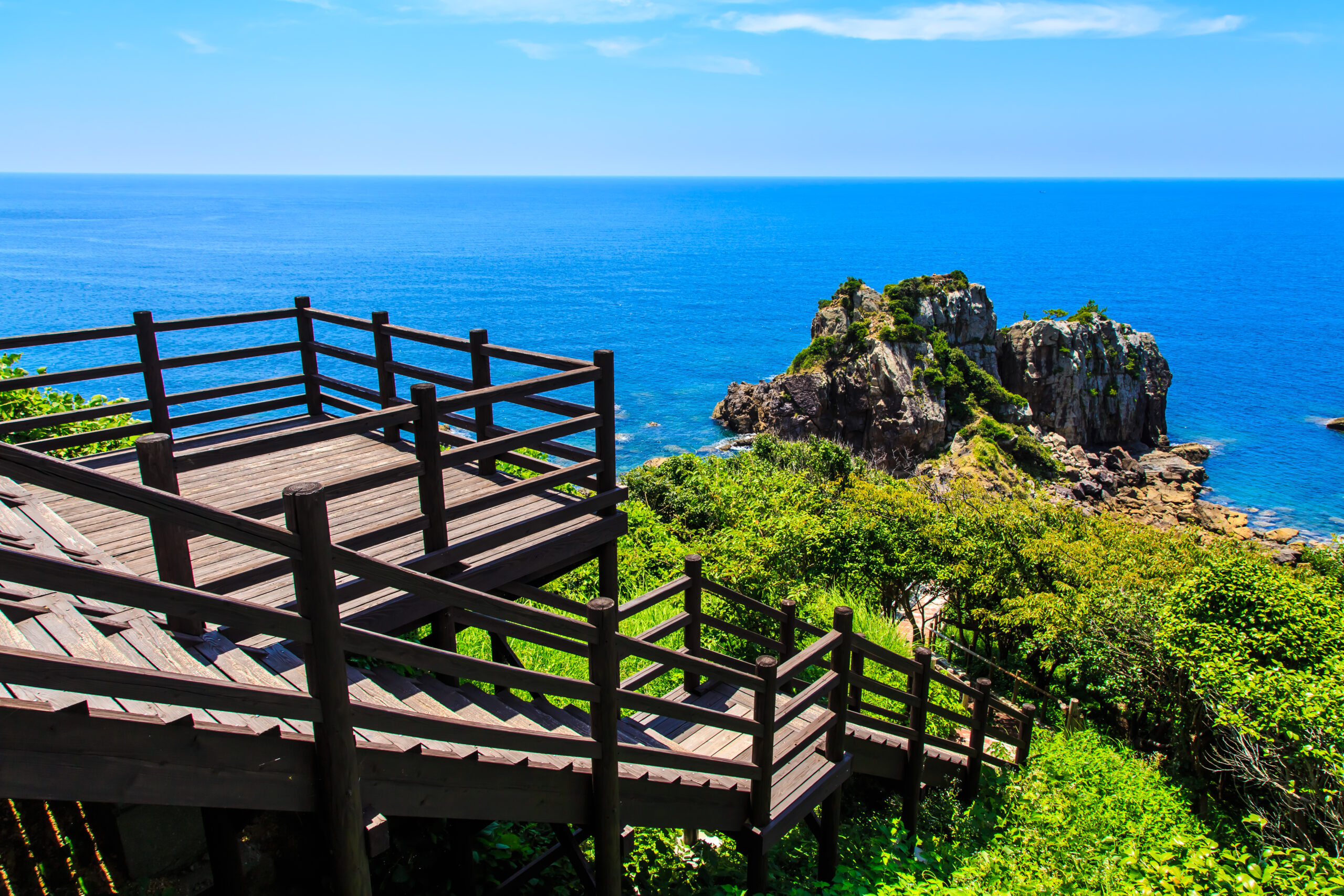
Onigaura Observatory is a spectacular viewpoint offering panoramic views of the dynamic cliffs of Amakusa’s west coast and the vast East China Sea. Located on the Sunset Line, where the setting sun paints the sea and sky crimson in the evening, it’s an easy stop during a drive.
Location: 2256 Shimoda Kita, Amakusa-machi, Amakusa City, Kumamoto Prefecture
Thirteen Buddhas Park
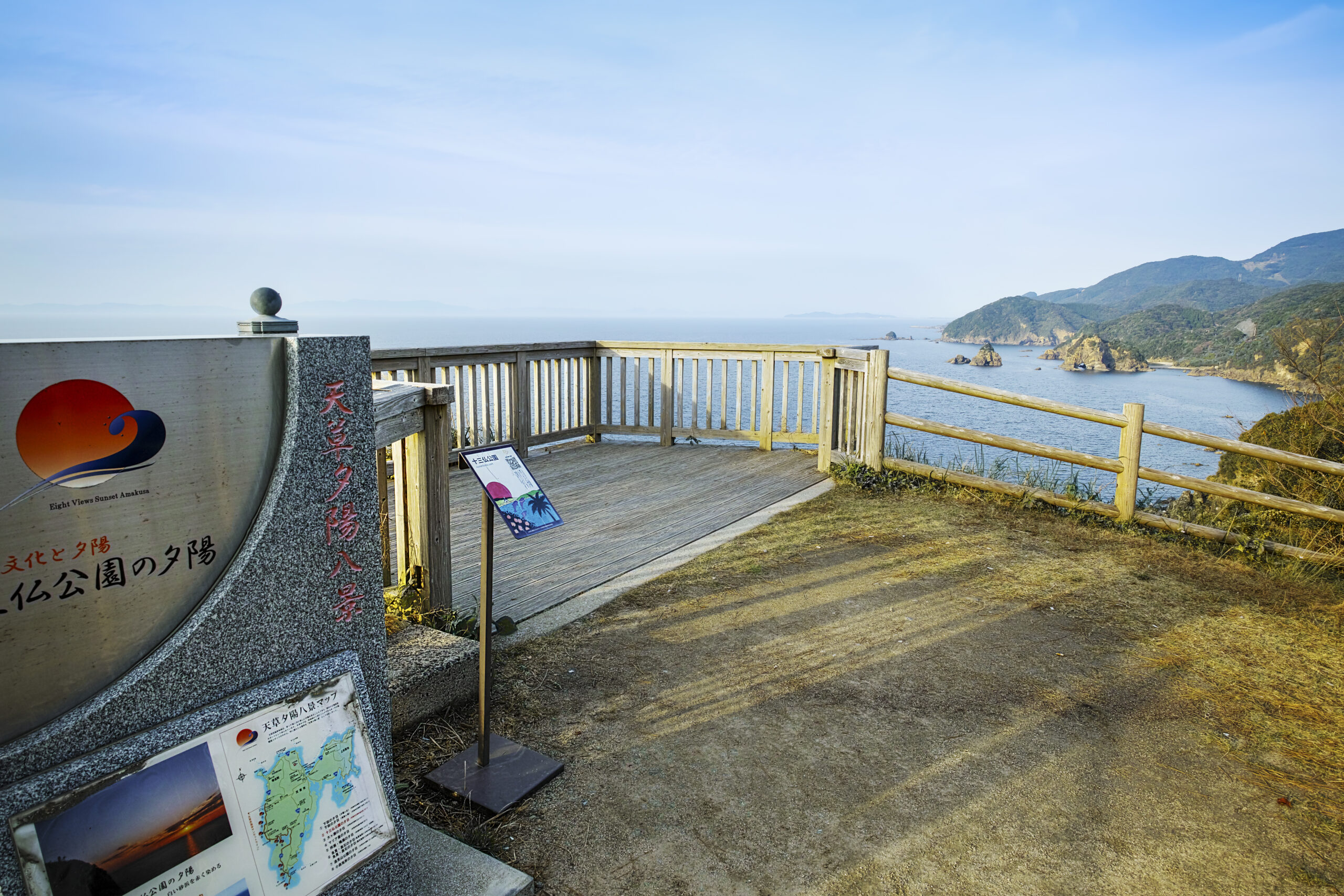
“Jusanbutsu Park” is located on a hill overlooking the Amakusa Sea, offering panoramic views from Myokenura to Shiratsuruhama Beach. Named after the Thirteen Buddhas Hall built nearby during the Muromachi period, the park also features monuments inscribed with poems by the poets Yosano Tekkan and Akiko.
Location: Takahama Kita, Amakusa-machi, Amakusa City, Kumamoto Prefecture
Eight Scenic Views of the Sunset in Amakusa ③ Sunset at Ogase
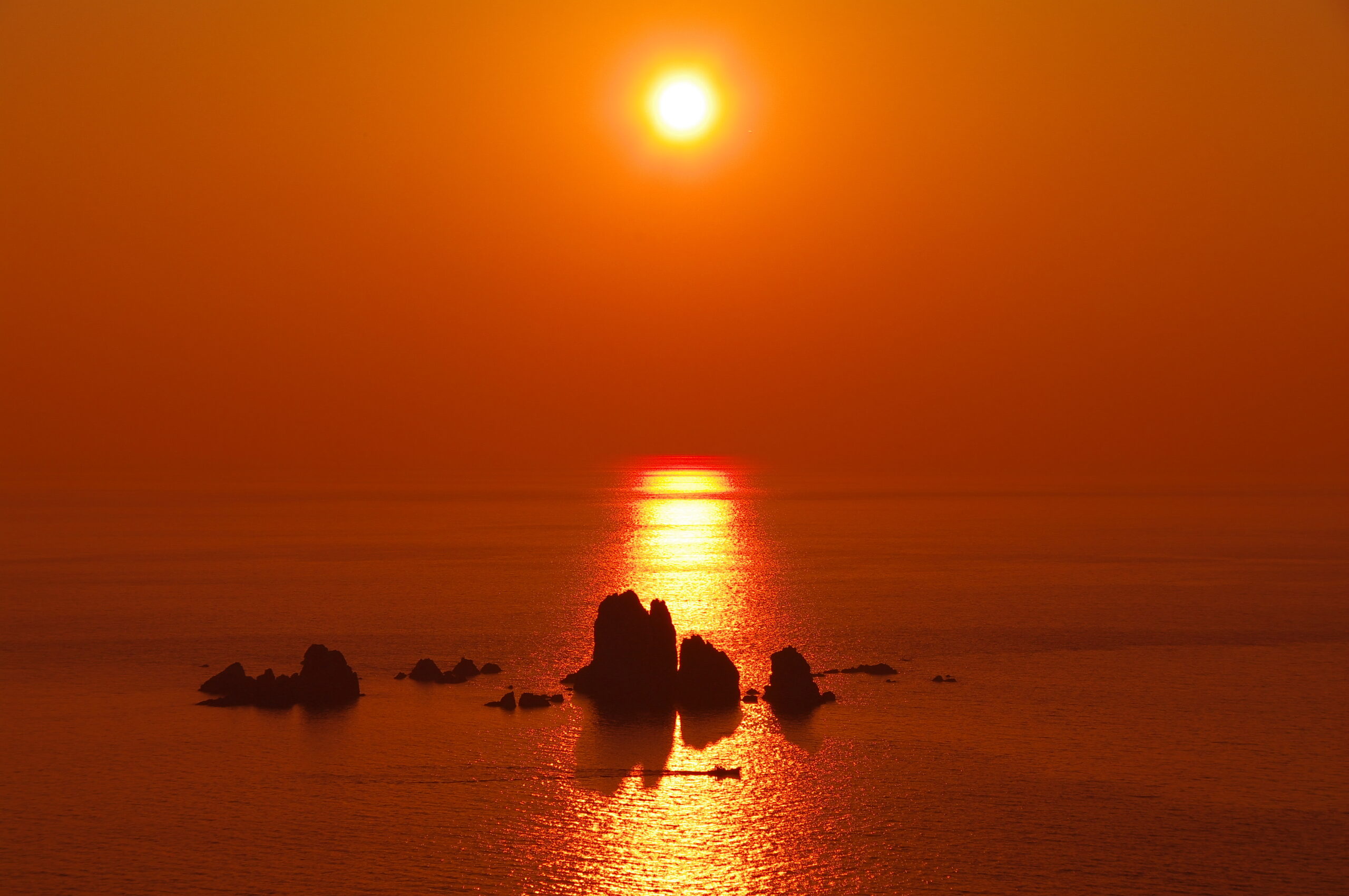
The Ogase reefs, carved by the rough waves of the Amakusa Sea, are a famous spot for viewing sunsets, representative of Amakusa. The nearby seabed is home to tropical creatures such as corals, sea fans, and hydra, making it a spot that truly embodies the charm of Unzen-Amakusa National Park.
Nishidaira Camellia Park
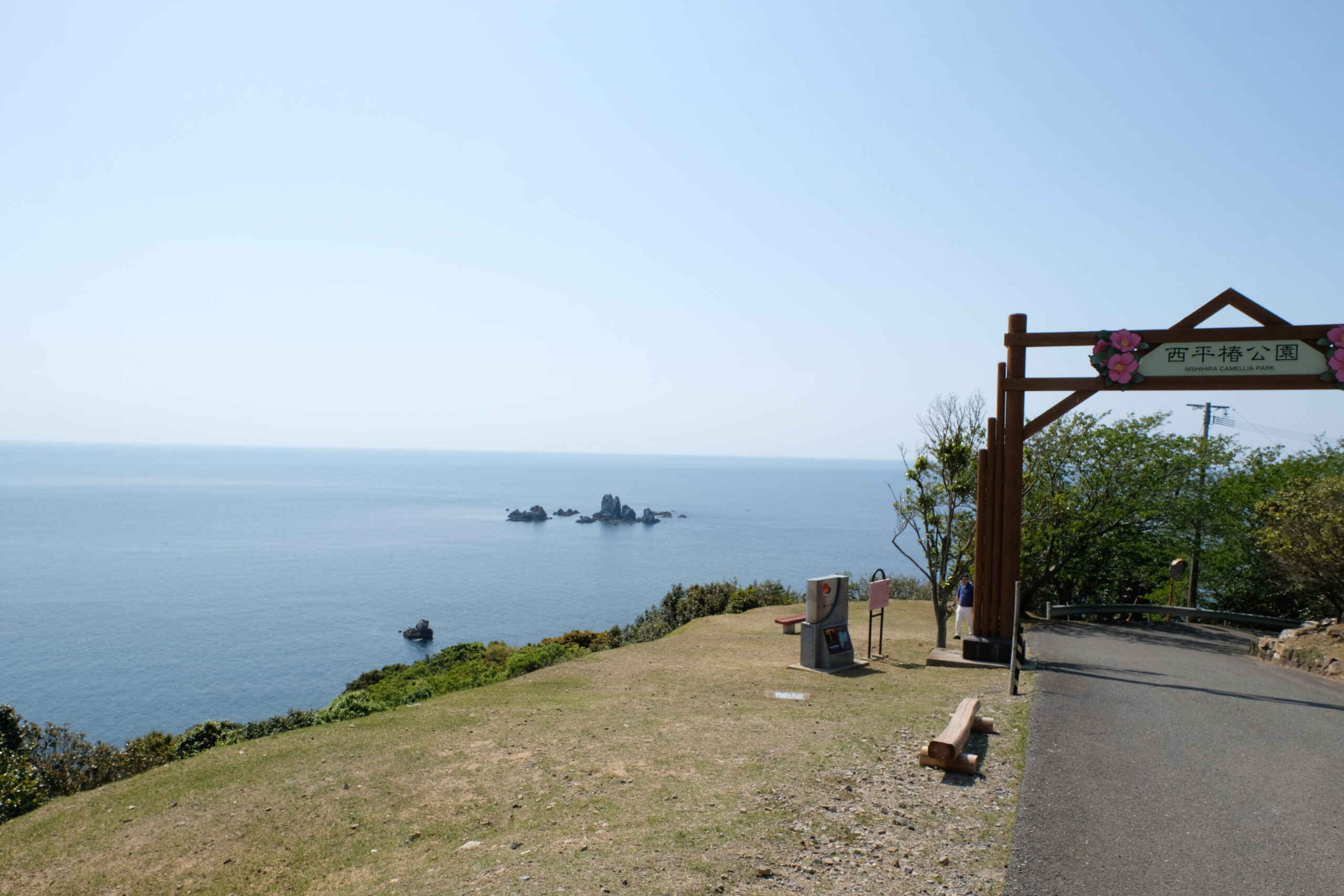
Approximately 20,000 wild camellia trees grow naturally here, and every year from mid-January to mid-March, the area is covered in a sea of bright red camellia blossoms. A banyan tree, over 100 years old, which has watched over this land for generations, is also a highlight. The scenery, a tapestry of flowers, sea, and sky, is a winter tradition in Amakusa.
Location: 7480-5 Oe, Amakusa-machi, Amakusa City, Kumamoto Prefecture
Sakitsu settlement in Amakusa, a World Cultural Heritage site
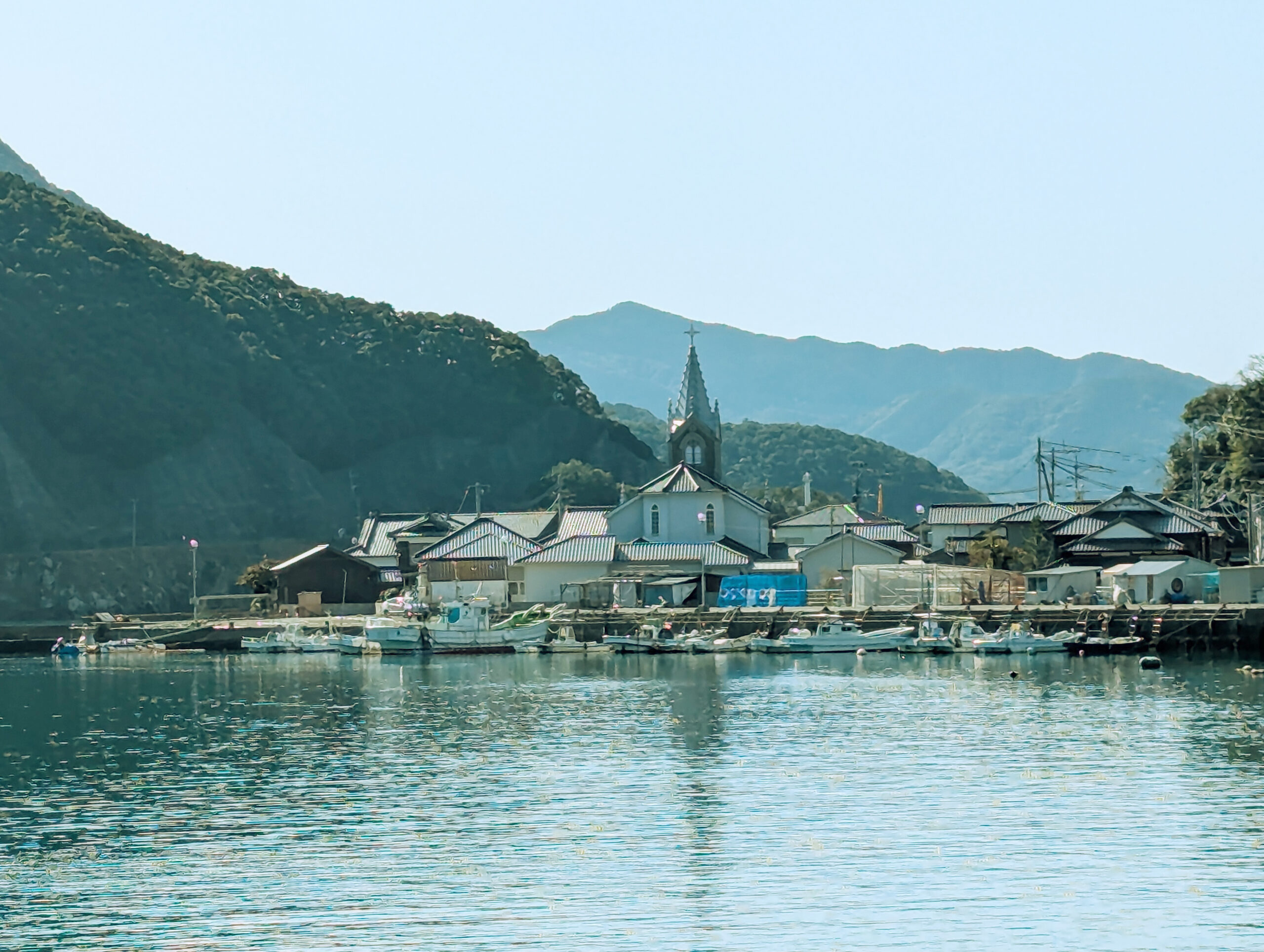
In 2018, it was registered as a World Cultural Heritage site as part of the “Hidden Christian Sites in the Nagasaki Region.” Within the settlement, visitors can experience traces of faith, including a shrine where the Hidden Christians prayed daily, a Gothic-style church, and a statue of the Virgin Mary enshrined at the tip of the cape.
Location: Sakitsu area, Kawauura-machi, Amakusa City, Kumamoto Prefecture
Tomiyama Daffodil Park
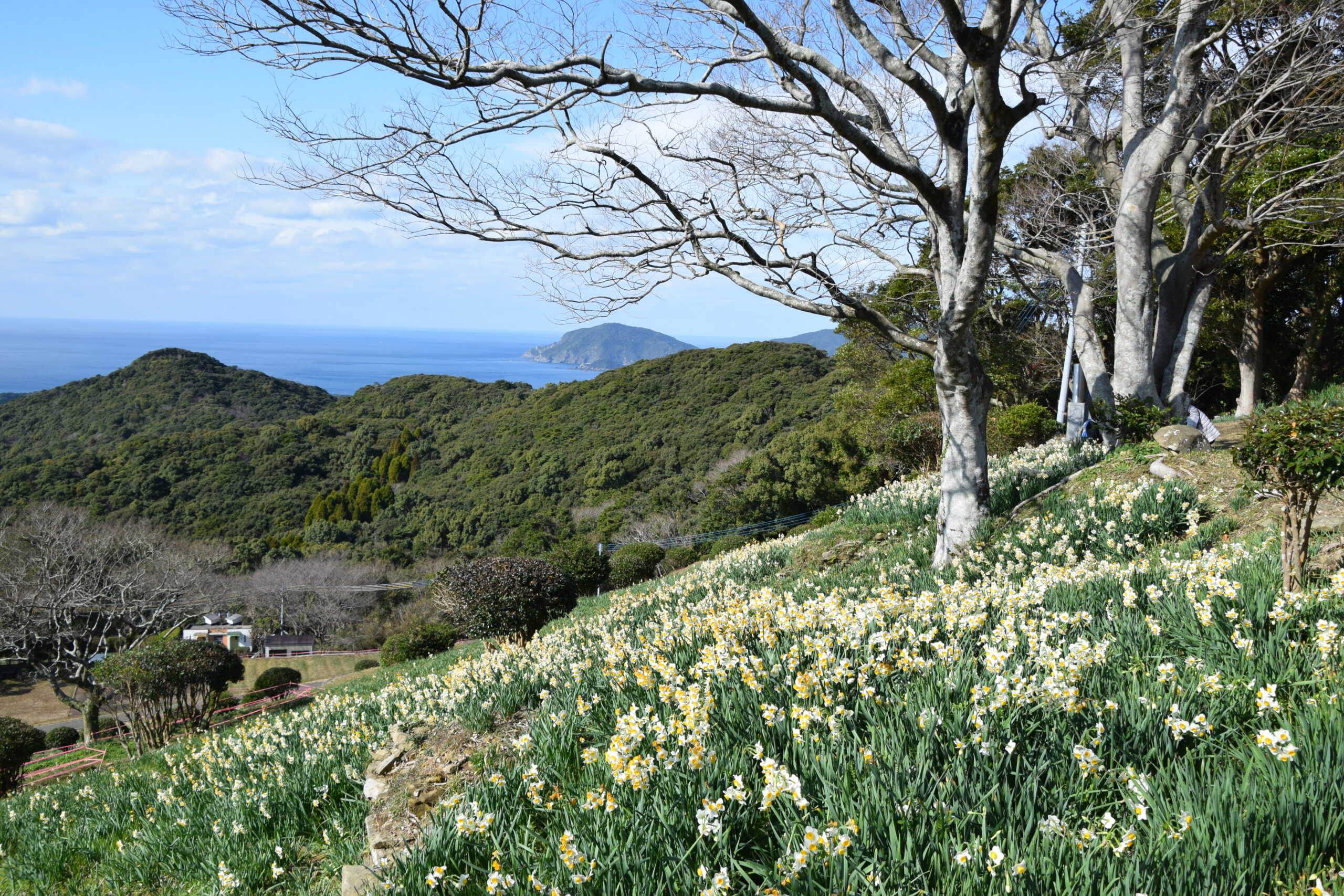
This observation park, situated 217 meters above sea level and overlooking Ushibuka Port, is a popular recreational spot for locals. Every year from mid-December to early April, approximately 450,000 Japanese daffodils and 50,000 Western daffodils of 19 different varieties bloom across the mountaintop. The sunset over the East China Sea is one of the “Eight Scenic Views of Amakusa Sunsets.”
Location: 1415 Ushibuka-machi, Amakusa City, Kumamoto Prefecture
Mogushi Beach
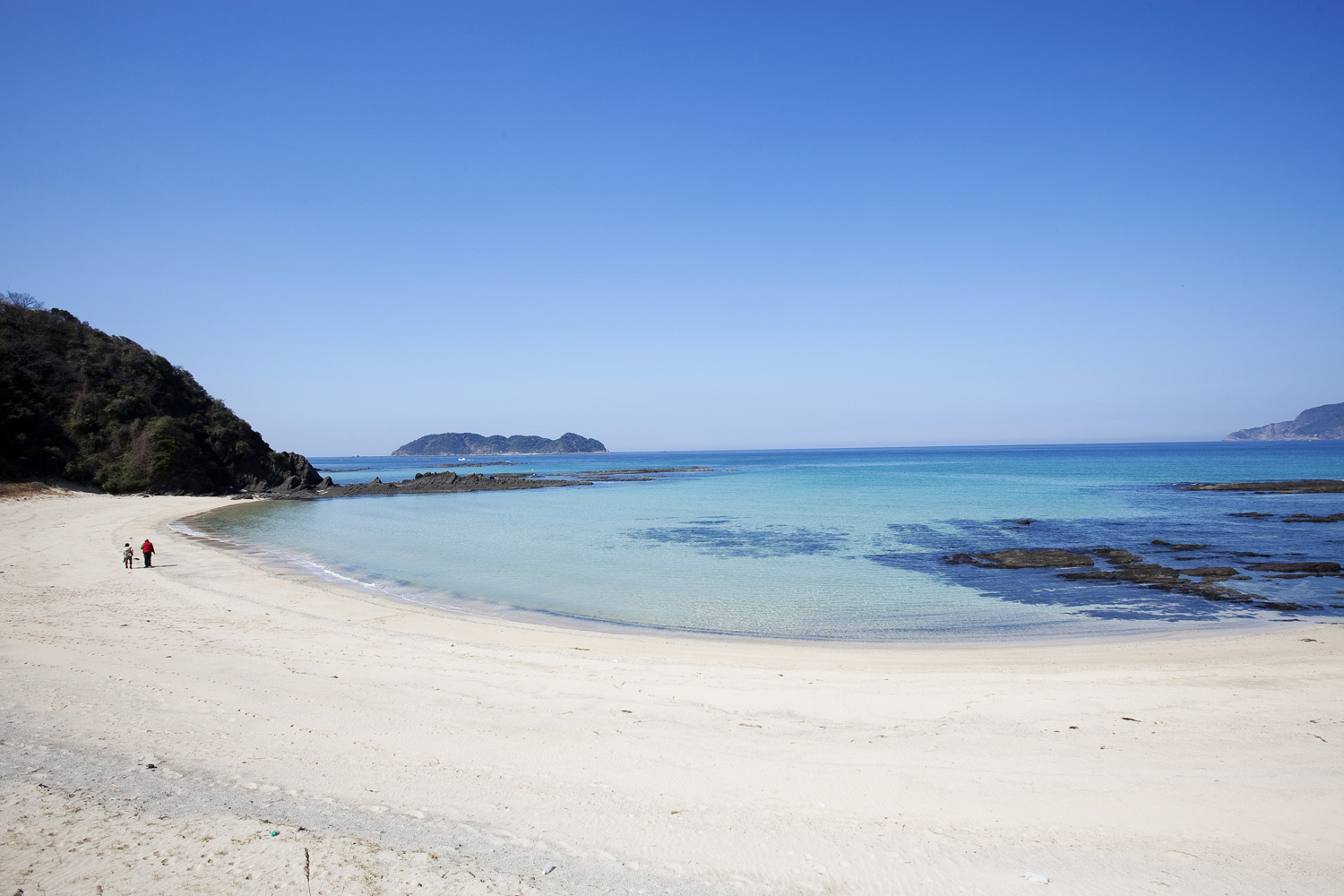
This beach in Kumamoto Prefecture is unique in that it utilizes the natural topography of the land. The seabed features both sandy and rocky areas, allowing visitors to observe marine life such as fish and crabs. The water’s natural clarity is among the best in the prefecture, and sea turtles sometimes appear to lay their eggs around May and June.
Location: Ushibuka-cho, Amakusa City, Kumamoto Prefecture
Satsuki Beach
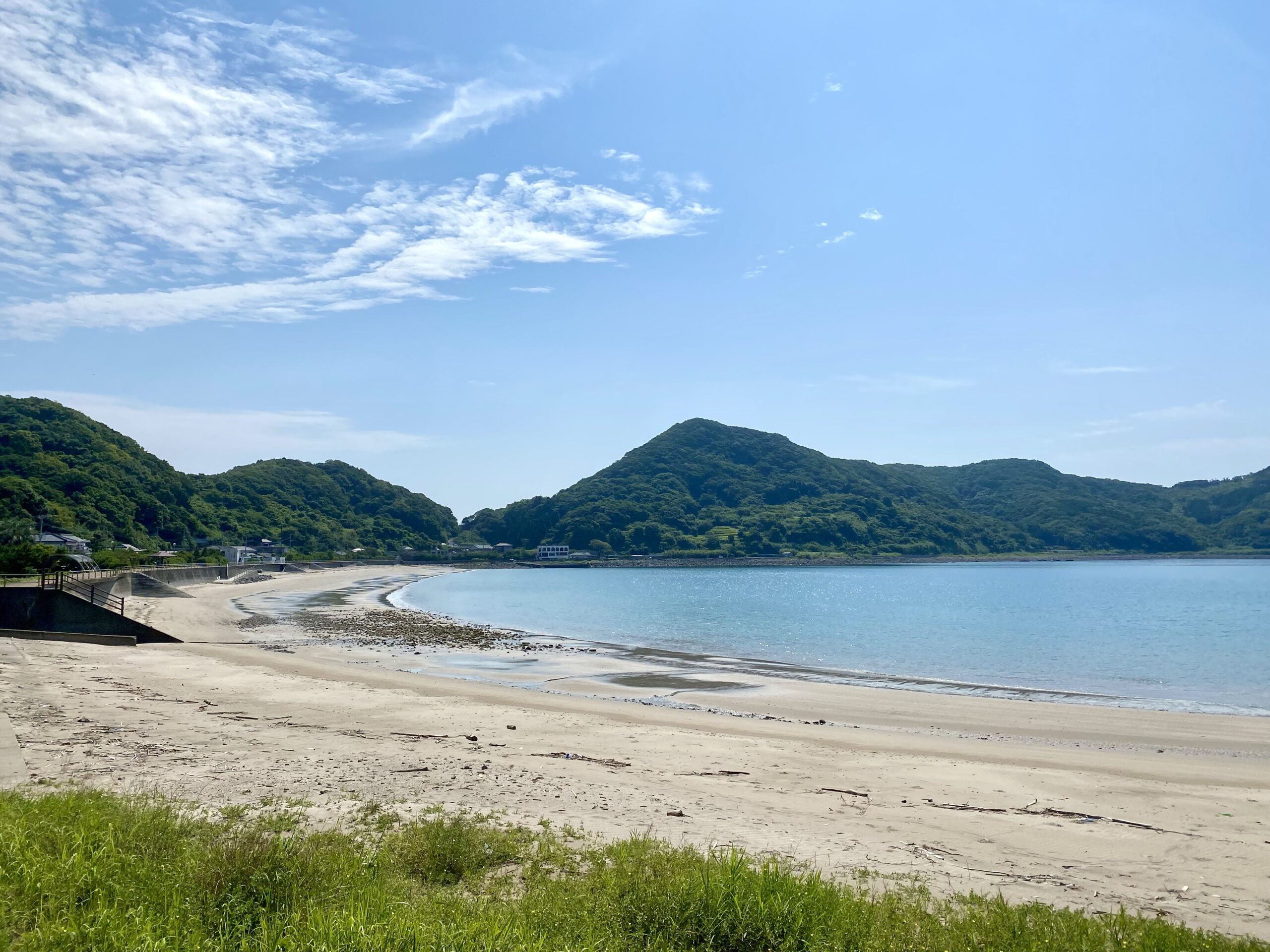
This shallow, easily accessible beach is popular with families. A ramp is available for wheelchair users to reach the sandy shore. The name comes from the beautiful crescent-shaped, 1km-long stretch of sand. With a plaza and park surrounding the beach, adults and children alike can relax and enjoy the sea.
Location: Satsuki, Ushibuka-machi, Amakusa City, Kumamoto Prefecture
Tsurubayama Enchi (Marine Park)
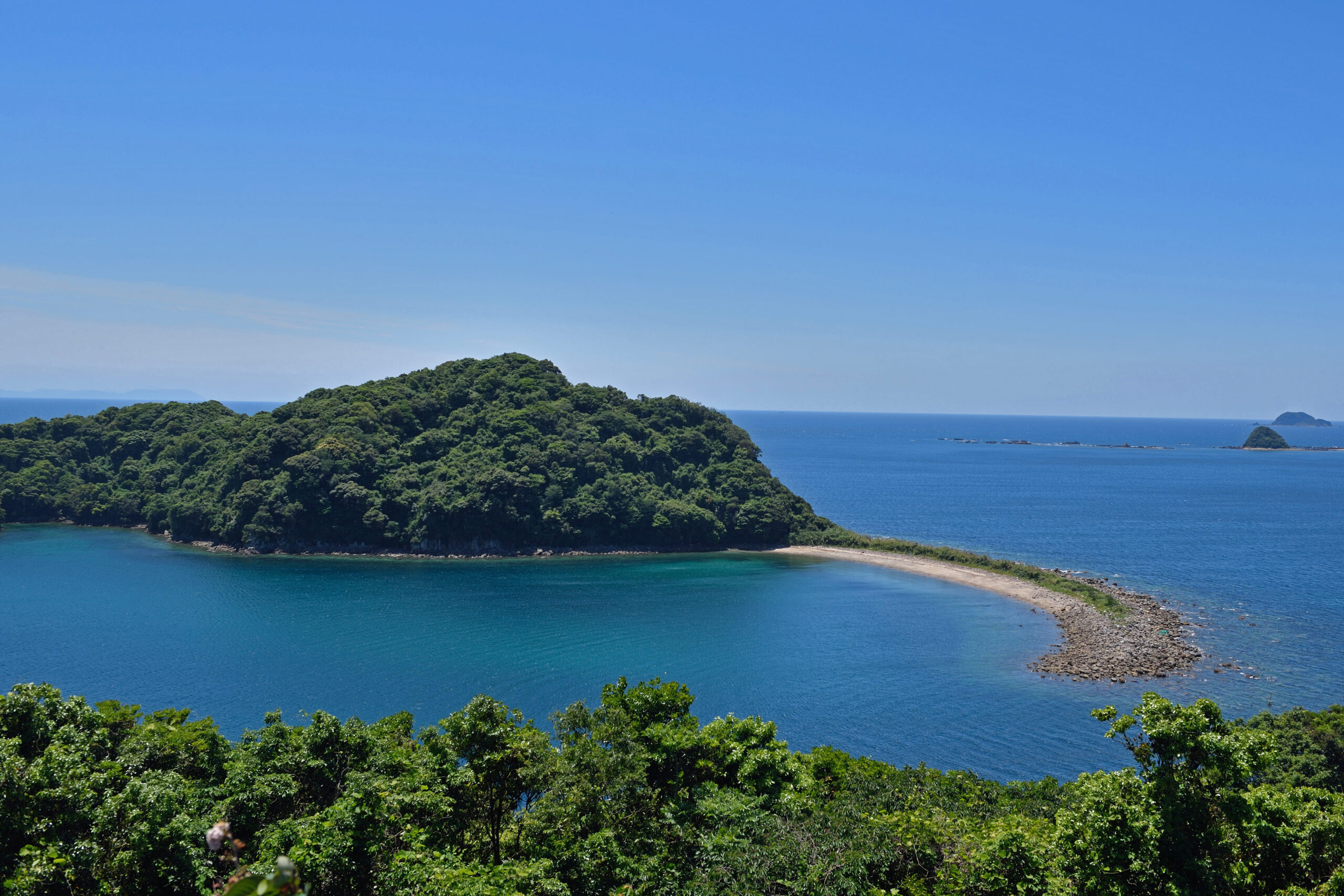
This park is located on the southernmost cape of Amakusa. In spring, approximately 1,000 cherry trees bloom, creating a beautiful contrast between the sea and the blossoms. Along the promenade leading to the observation deck, azaleas, daffodils, and other flowers bloom in every season, allowing visitors to appreciate the beauty of the scenery throughout the year.
Location: Miyano-Kawachi, Kawauura-machi, Amakusa City, Kumamoto Prefecture
Shikisaki Cape Lighthouse
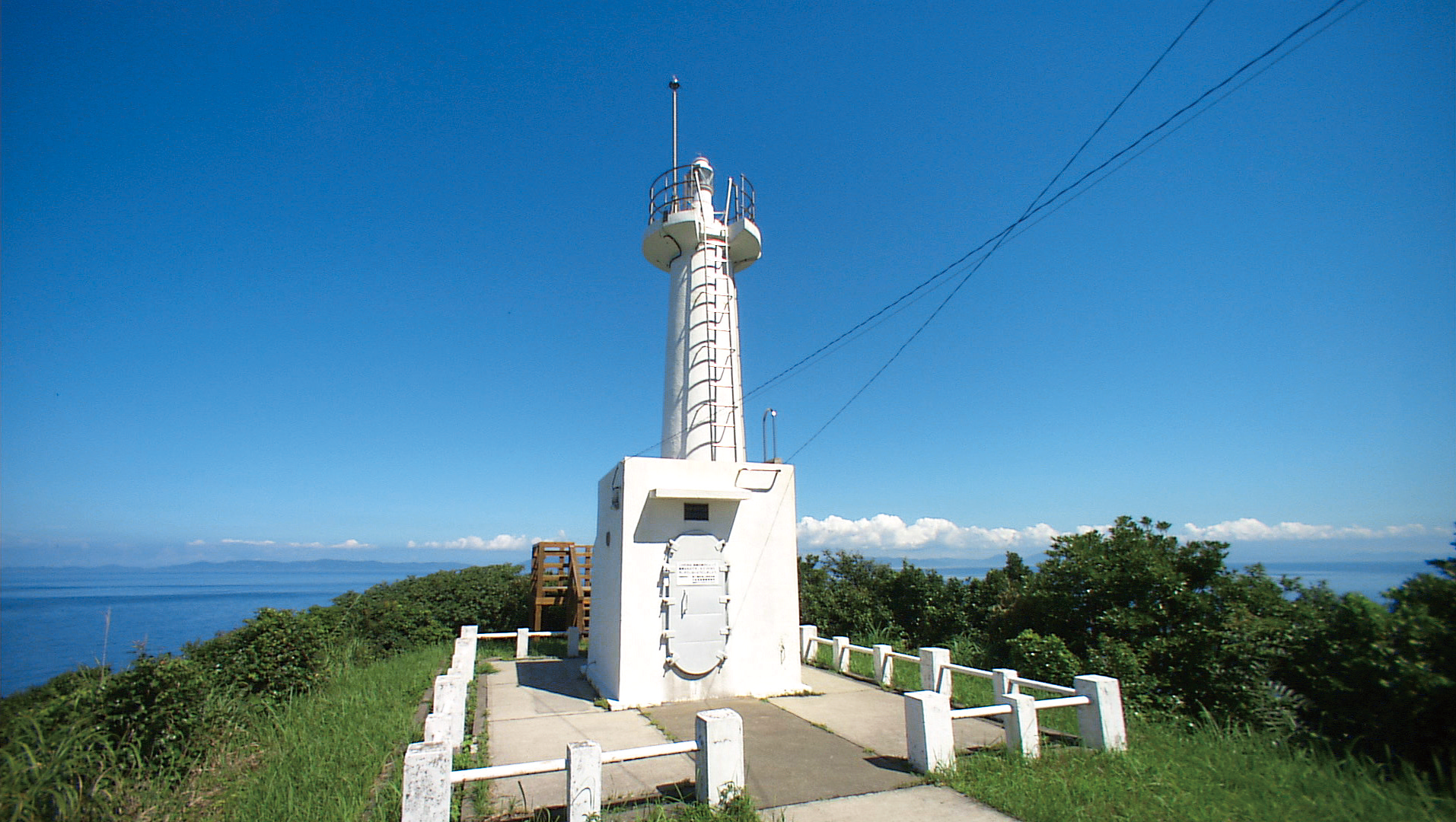
A white lighthouse (46m above sea level) stands at the tip of the Tomioka Peninsula. The surrounding area is the Shikizaki Cape Park, where wildflowers such as sea jasmine, pittosporum tobira, and camellias bloom seasonally, adding color to the Unzen-Amakusa National Park. From September to December, you can enjoy the sunset over the sea.
Location: 1341 Reihoku-machi, Amakusa-gun, Kumamoto Prefecture
Shiraiwasaki
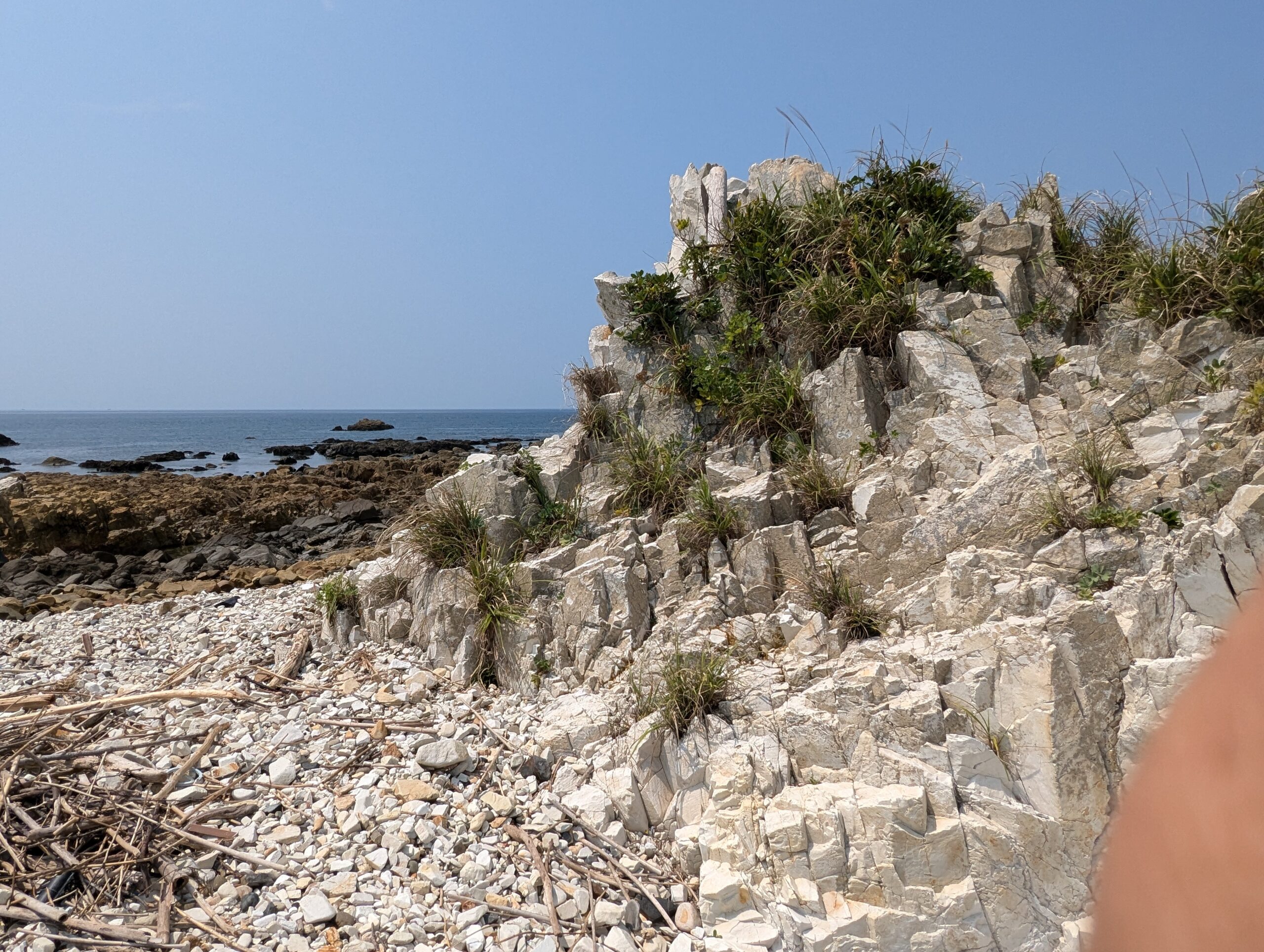
Shiraiwasaki Coast is a series of rocky outcrops carved by rough waves. The landscape, dotted with massive white rocks, is said to symbolize the original scenery of Amakusa. The white rocks are actually “Amakusa pottery stone.” Experience the dynamic charm unique to Amakusa, renowned as one of the world’s leading producers of pottery stone.
Location: Tomioka, Reihoku-machi, Amakusa-gun, Kumamoto Prefecture
Yushima Lighthouse
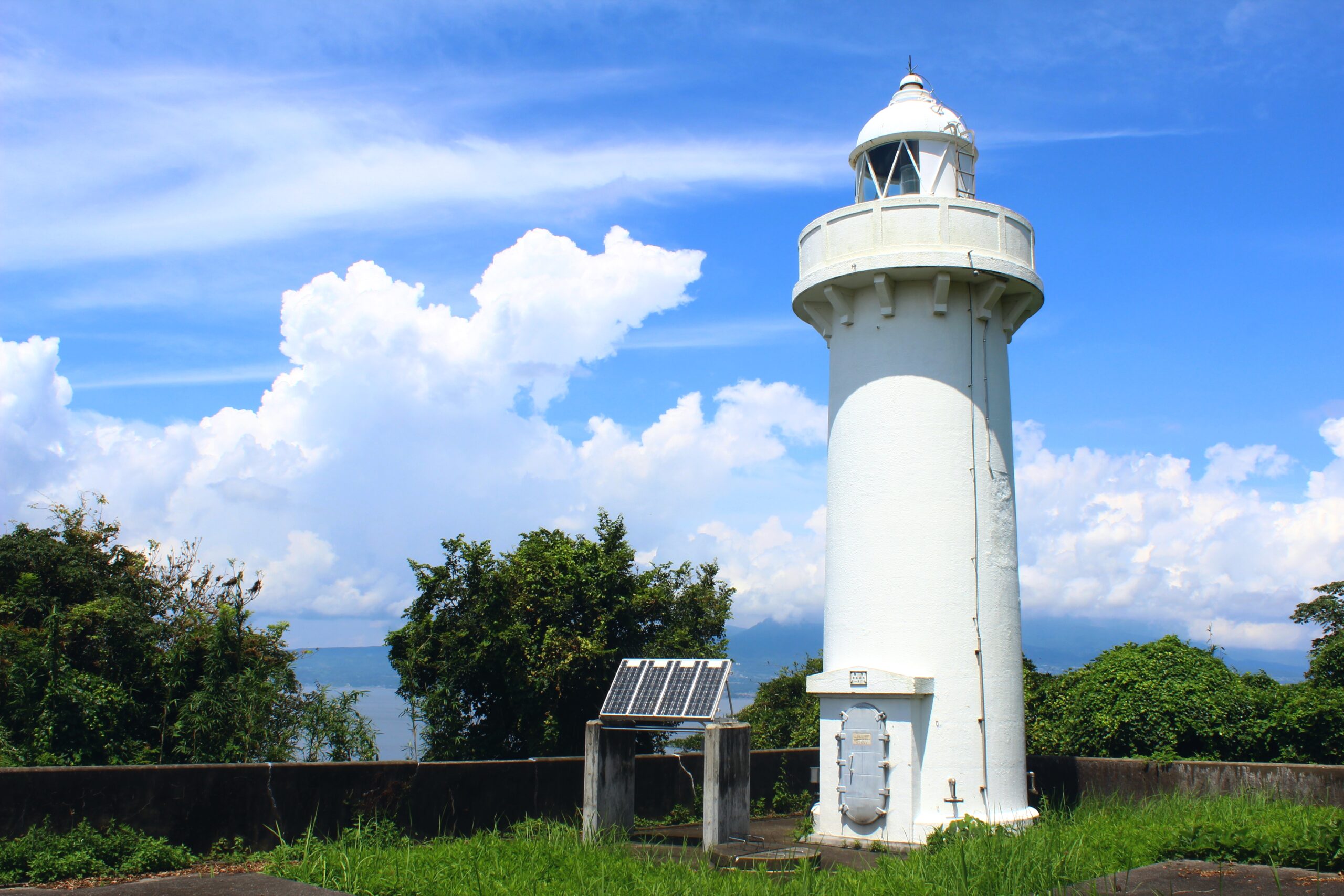
This small lighthouse, standing on a hill in Yushima, once served as a sea route guide for transporting coal loaded onto sailing ships at Miike Port to Nagasaki-Kuchinotsu Port. Yushima is also known as the “Discussion Island” associated with Amakusa Shiro, and in recent years has gained popularity as a “cat island.” Enjoy a moment of relaxation surrounded by nature and felines.
Location: Yushima, Oyano-cho, Kamiamakusa City, Kumamoto Prefecture
Pearl Sun Beach (Higai Beach)
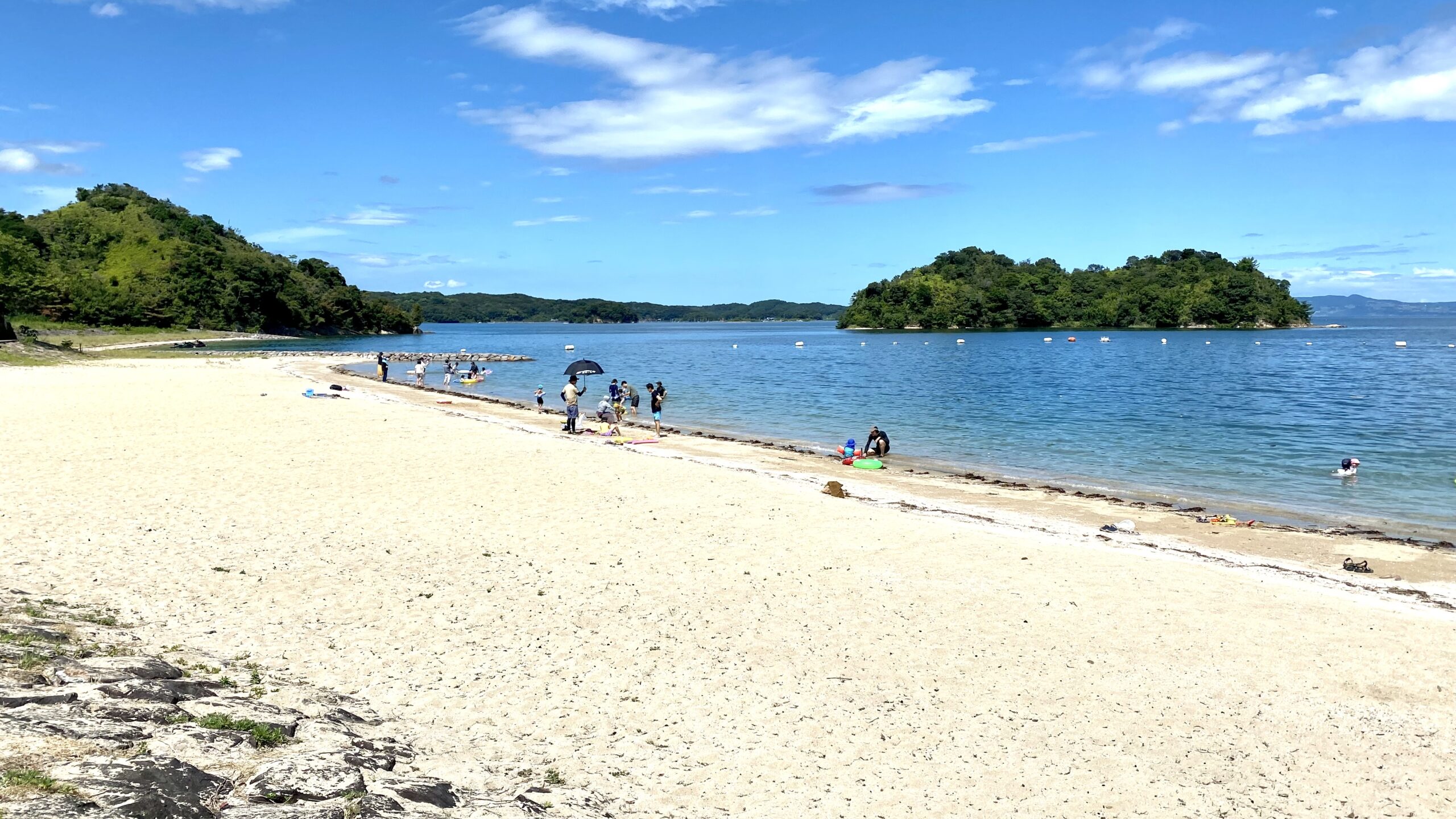
A 300-meter-long white sandy beach and calm sea. On clear days, you can see Mount Unzen-Fugen and Cape Nagasakibana, and at low tide, you can even walk to Takamokujima Island across the bay. Along the way, the tidal flats of Nagaura Island are one of Japan’s leading habitats for the white-clawed fiddler crab. Every year from June to August, you can witness their courtship behavior as they raise their claws.
Location: Aizu, Matsushima-cho, Kamiamakusa City, Kumamoto Prefecture
Kuratake Shrine
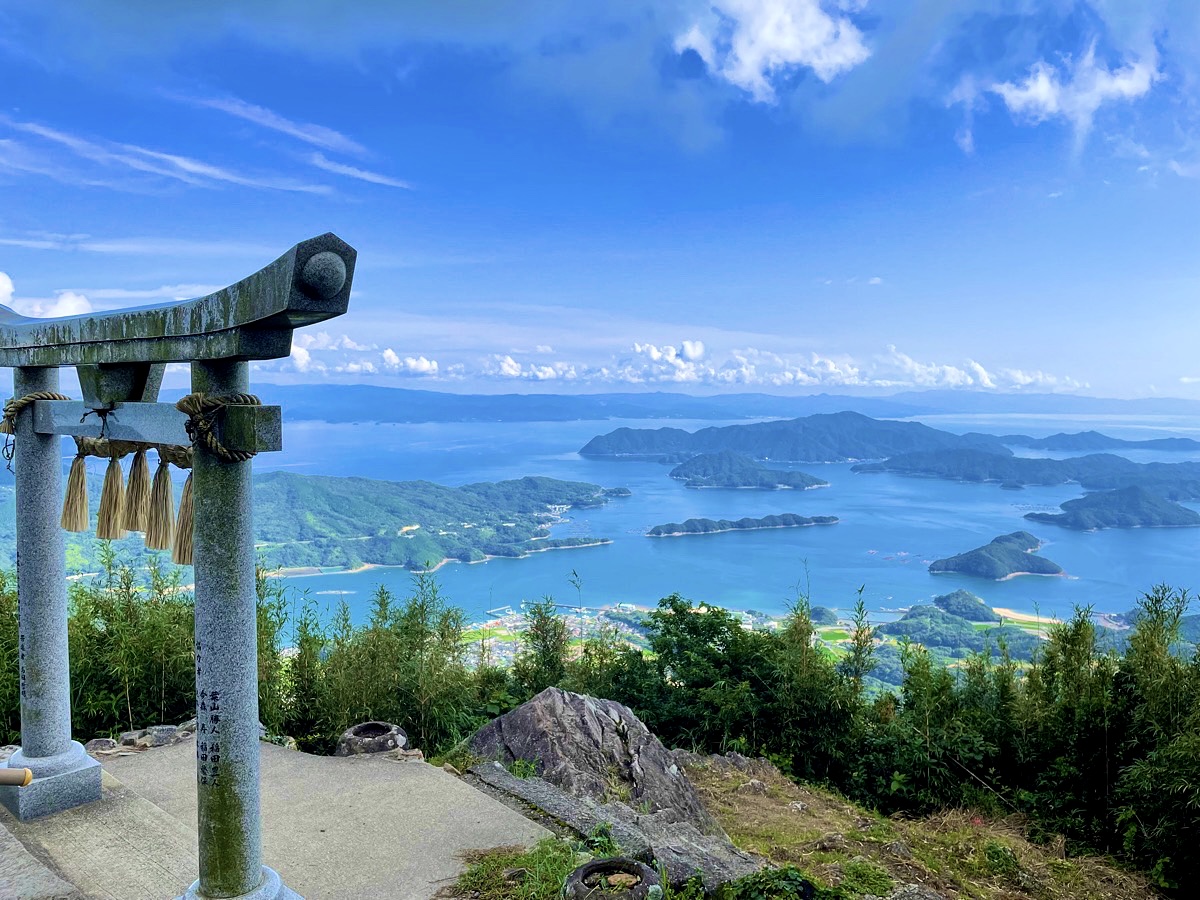
This shrine is located near the summit of Mt. Kuratake (682m above sea level), the highest peak in the Amakusa Islands. It offers breathtaking views, including the calm waters of the Shiranui Sea (Yatsushiro Sea) and the islands of Goshoura below, and a 360-degree panoramic vista stretching from the Ariake Sea to Mt. Unzen on the other side. It’s also a popular spot for taking photos of the “Sky Torii Gate.”
Location: Tanazoko, Kuratake-machi, Amakusa City, Kumamoto Prefecture
Kuroshima Beach
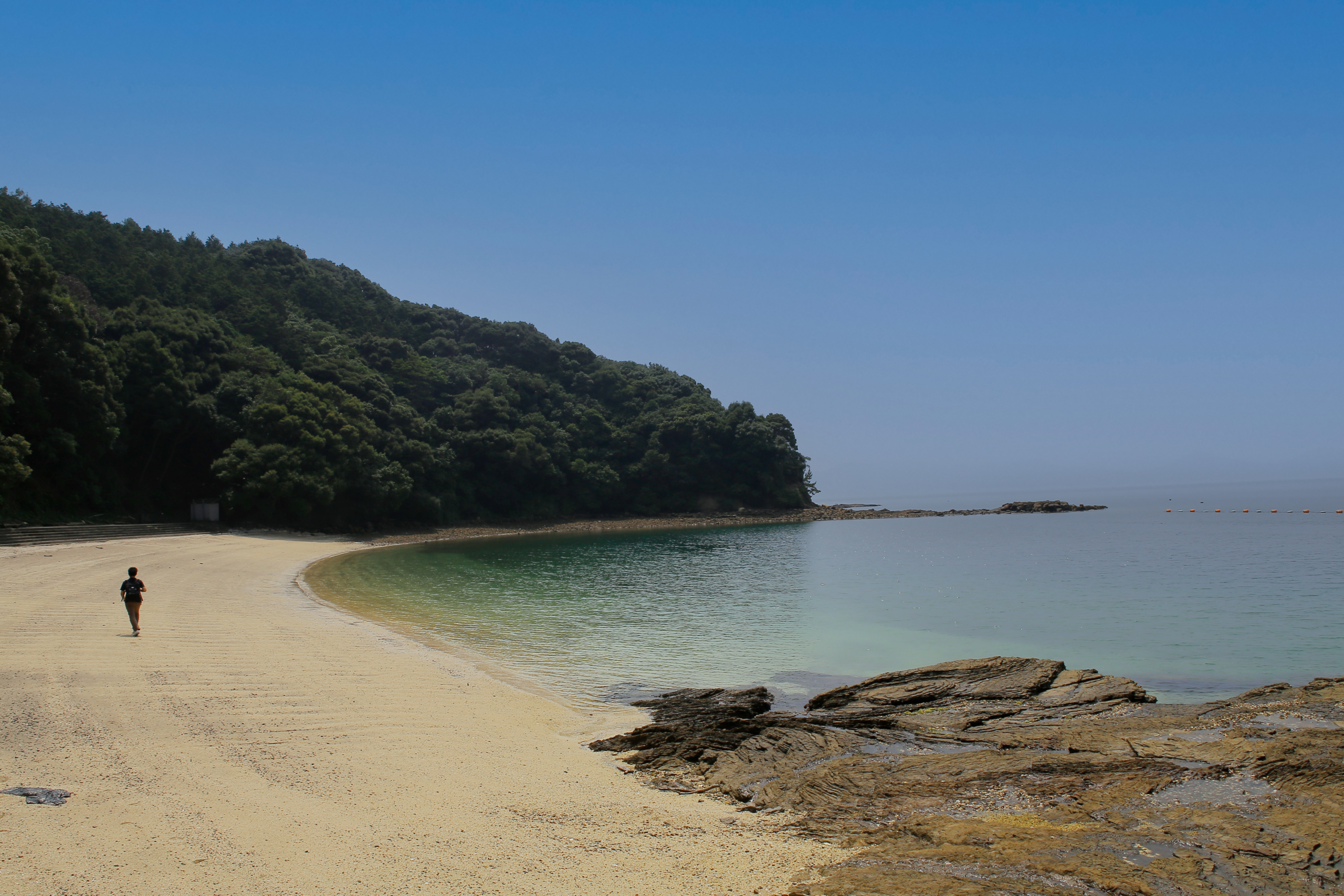
A 15-minute water taxi ride from Goshoura Port takes you to this tiny island, just 1.9km in circumference, a truly uninhabited island. The swimming season is from June 15th to August 31st. While there’s a campsite, it offers a true survival camping experience with no electricity or running water.
Location: Kuroshima, Goshoura-cho, Amakusa City, Kumamoto Prefecture
Ryudoyama Observation Deck
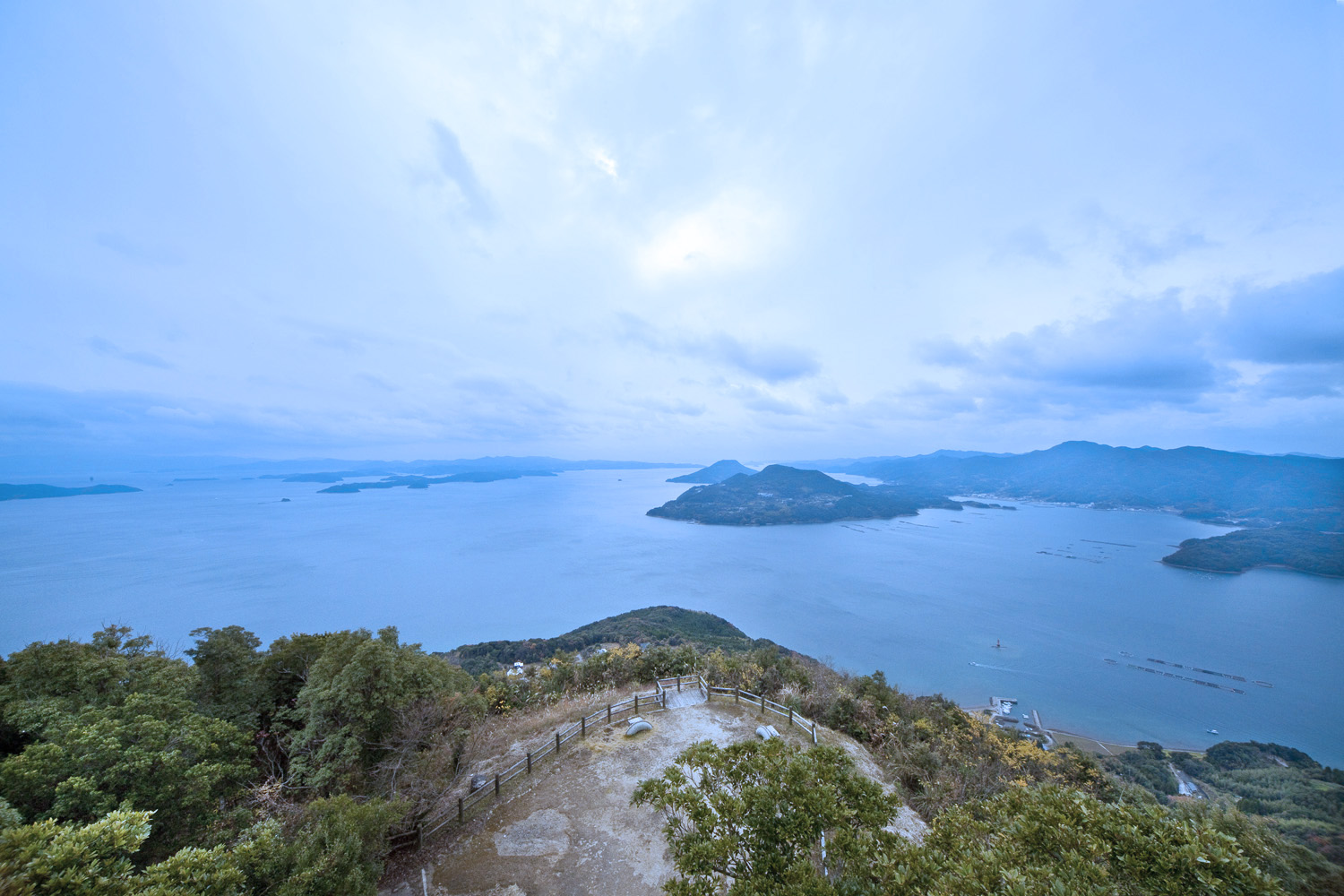
From the observation deck, you can enjoy a breathtaking 360-degree panoramic view stretching from the Shiranui Sea to the Amakusa Islands and the islands of Kagoshima. Shinwa Town is steeped in the legend of Yang Guifei, and on Ryudo Mountain, you’ll find a statue of Yang Guifei and a mysterious cave called “Dragon’s Hole.” Why not visit the statue of Yang Guifei, which is said to make you beautiful if you touch it?
Location: Komiyaji, Shinwa-cho, Amakusa City, Kumamoto Prefecture
Yazugoku
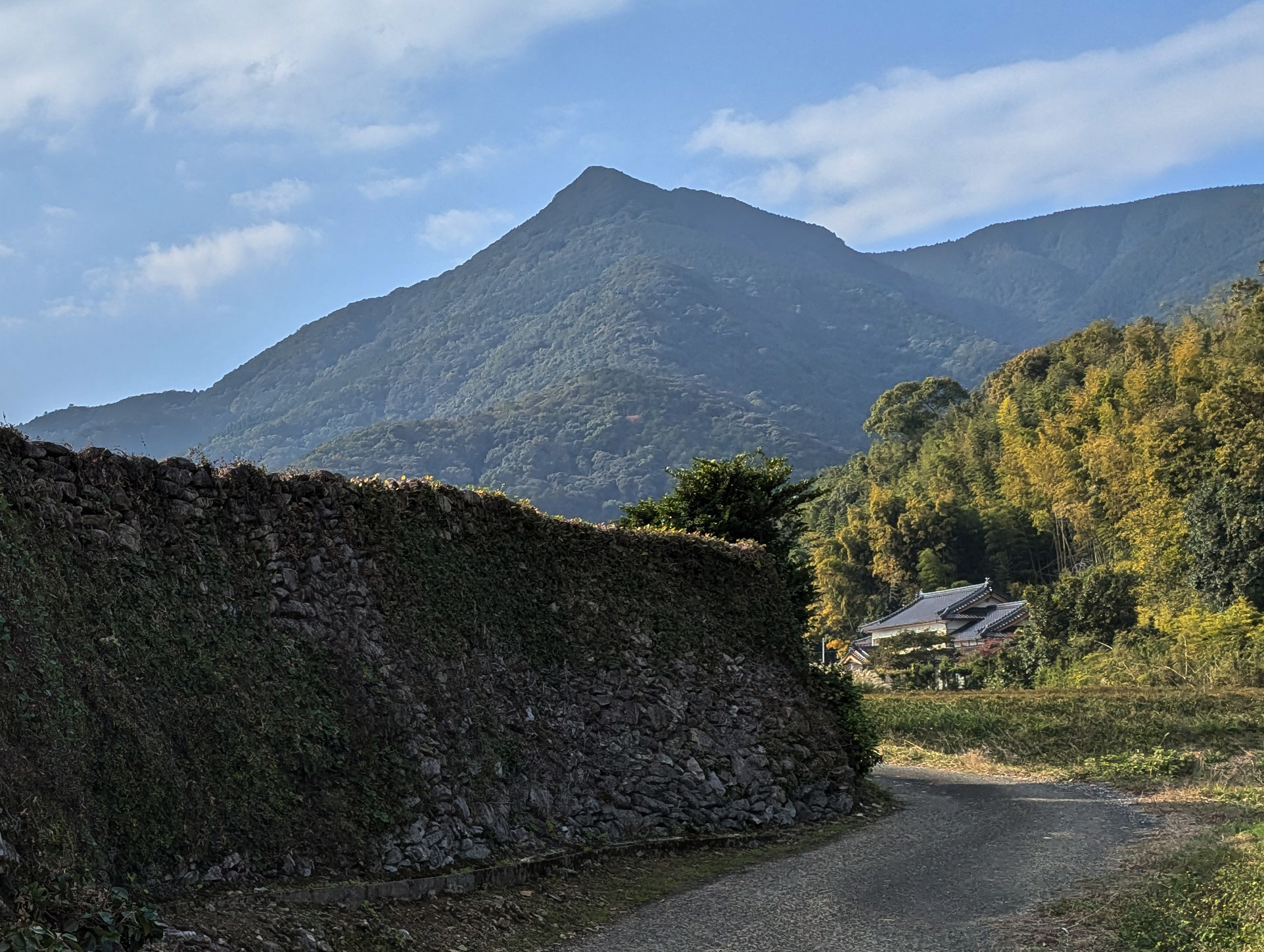
Yahazudake (elevation 636m), which follows the ridge of Kuratake, the highest peak in the Amakusa Islands, is best climbed via the “Kuratake Alpine Route” (Hanamichi climbing trail). Following the mountain path dotted with stone Buddha statues, you’ll reach the summit where the Kotohira Shrine sits, offering panoramic views of the islands of Goshoura in the distance.
Location: Miyata, Kuratake-machi, Amakusa City, Kumamoto Prefecture
Takamokujima Island
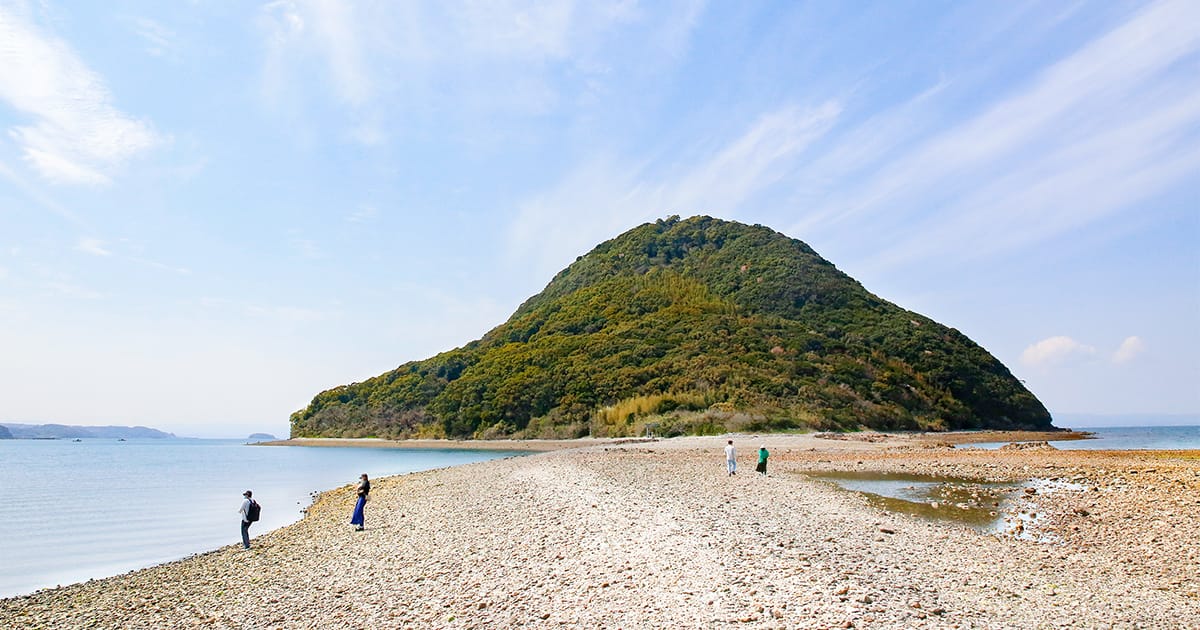
This charming, slightly elevated uninhabited island is accessible on foot via a path that appears from the sea for only a few hours during low tide. Recently dubbed “Amakusa’s Mont Saint-Michel,” it has become a popular photo spot. If you plan to walk, check the low tide times on the tide table at Higai Shinko Port.
Location: Higai, Aizu, Matsushima-cho, Kamiamakusa City
Amakusa Gokyo Bridge
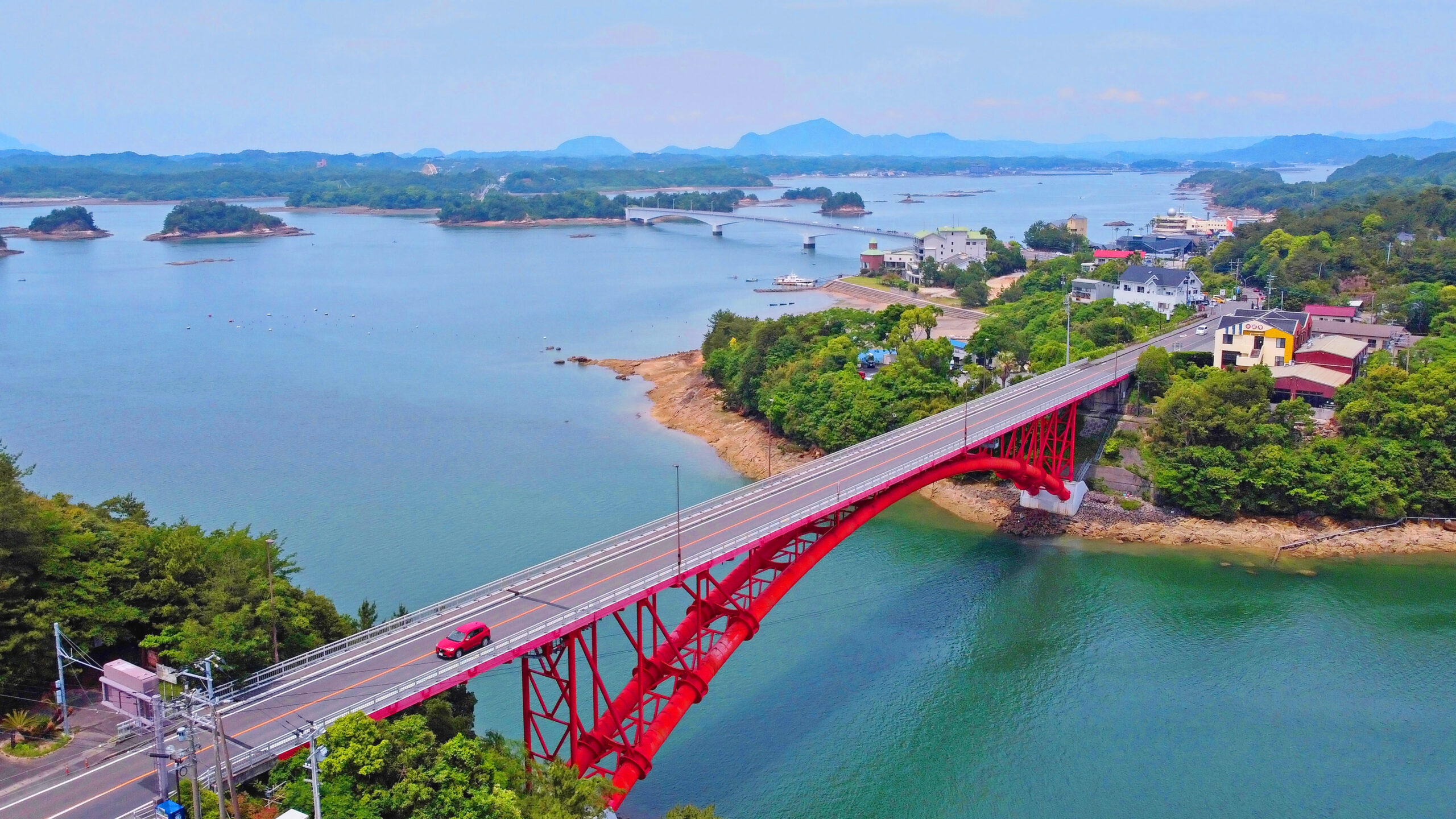
Opened in 1966, the “Amakusa Five Bridges” consist of Bridge 1 (Tenmon Bridge), Bridge 2 (Oyano Bridge), Bridge 3 (Nakano Bridge), Bridge 4 (Maejima Bridge), and Bridge 5 (Matsushima Bridge). It’s an excellent route for driving or cycling while enjoying the scenery of islands floating in the blue sea. It’s affectionately known as the “Amakusa Pearl Line.”
Location: Around Kamiamakusa City
Takamai Mountain Observatory
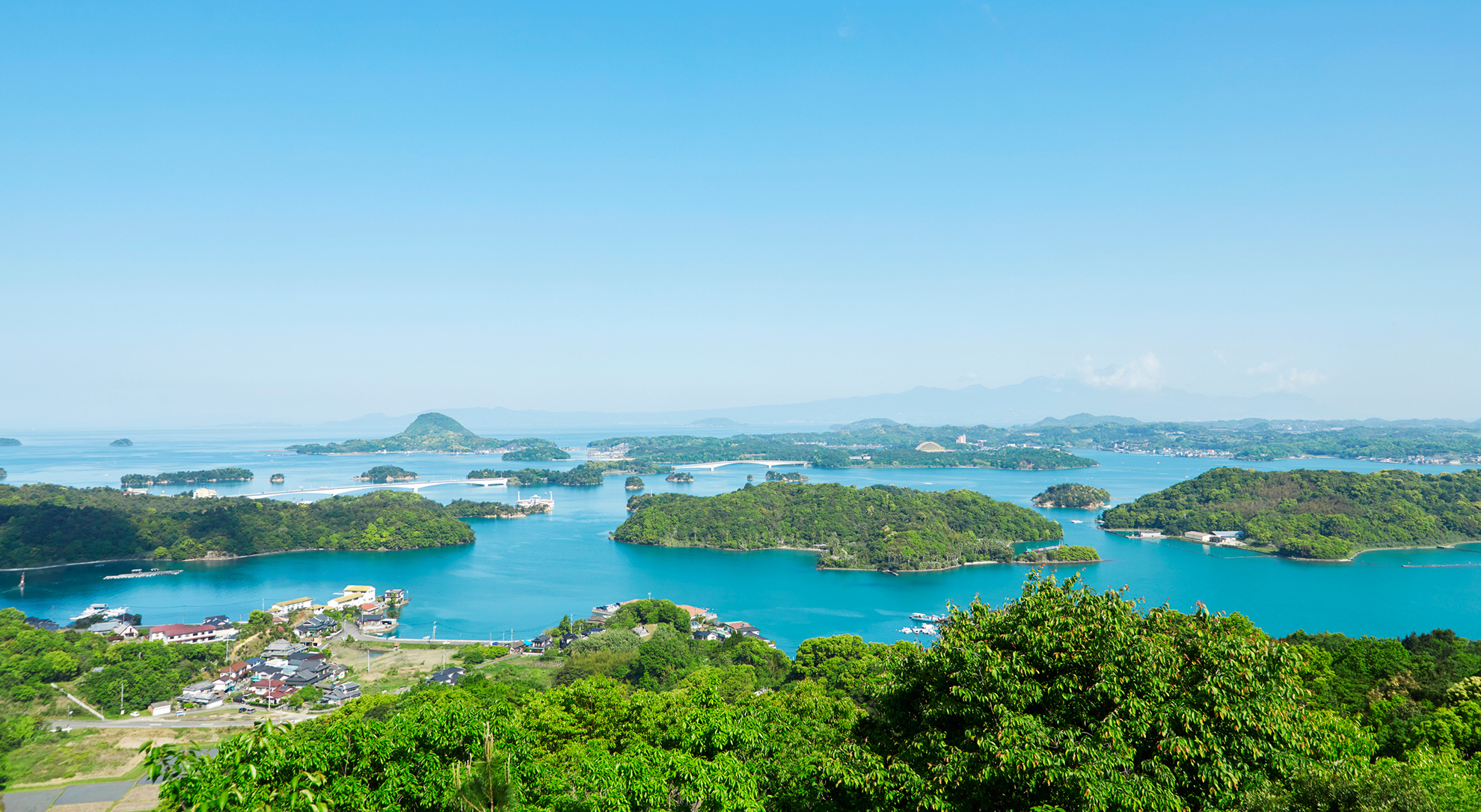
This viewpoint offers one of Amakusa’s most spectacular views of numerous islands. From near the summit, you can see Unzen to the west across the Ariake Sea, the Shiranui Sea to the east, and Aso in the far distance—making it the best viewpoint in Matsushima. The sunset view has been selected as one of “Japan’s Top 100 Sunsets,” and in spring, it is known as a popular spot for locals to relax and enjoy the cherry blossoms.
Location: Amura, Matsushima-machi, Kamiamakusa City, Kumamoto Prefecture
Sengonyama Observation Deck
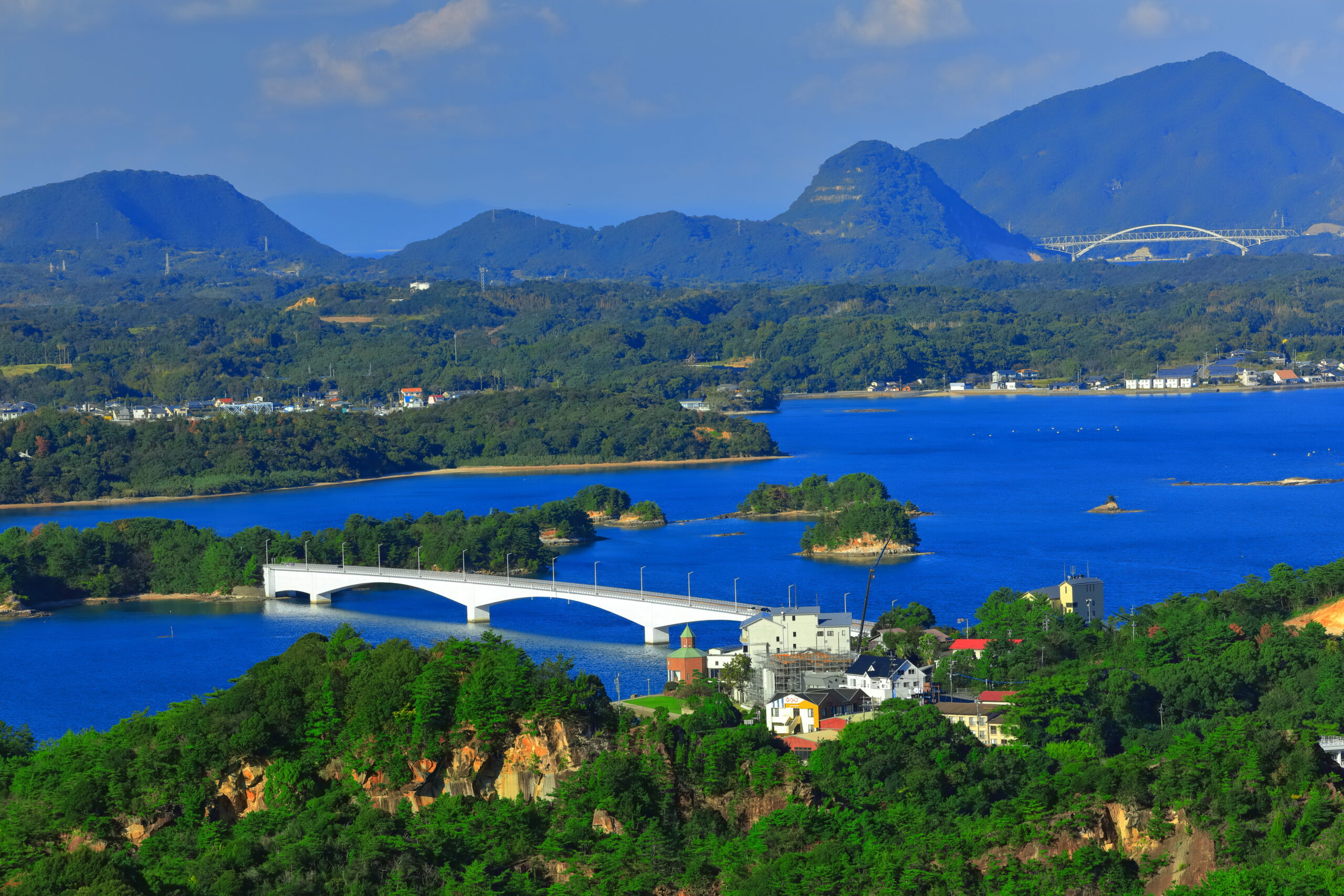
Named Senganzan (meaning “Thousand Rock Mountain”) due to its landscape of strangely shaped rocks, this mountain offers a panoramic view of the Amakusa Five Bridges from its 162-meter-high summit. On clear days, you can enjoy a 360-degree vista encompassing the Uto Peninsula, Shimabara Peninsula, Amakusa Shimoshima Island, and the Yatsushiro Sea. It’s a scenic spot known for its cherry blossoms in spring.
Location: Aizu, Matsushima-cho, Kamiamakusa City, Kumamoto Prefecture
Shiratake Forest Park Campground
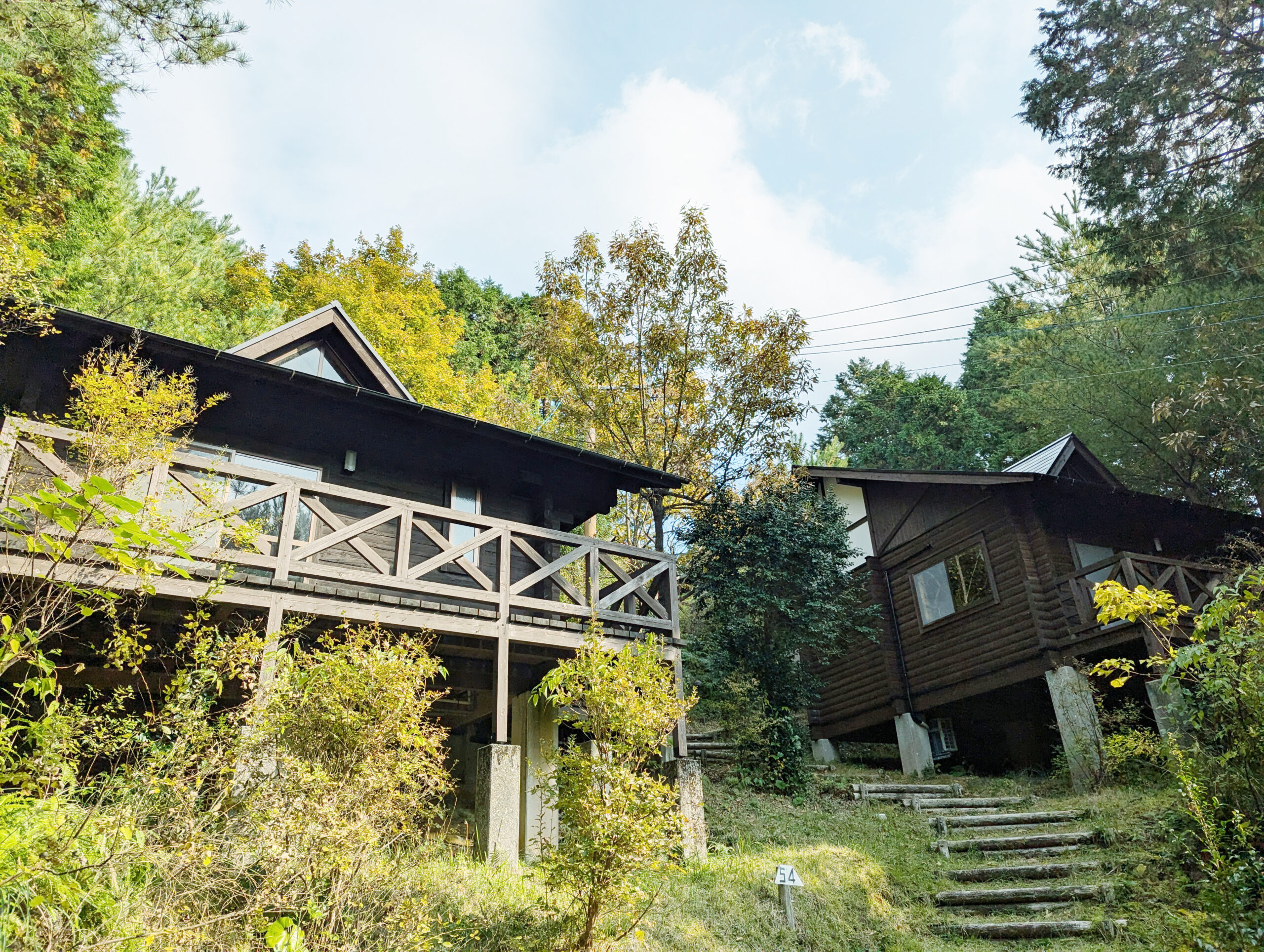
This vast natural park covers a total area of 50 hectares. In addition to a campsite, the park boasts numerous attractions such as “Fudo Falls,” “Yatake Shrine,” and “Yatake Megalithic Site,” making it perfect for leisurely strolls. The “Shiratake Sky Zipline,” a 350-meter-long zipline gliding 90 meters above the summit of Mt. Shiratake (373 meters above sea level), is a popular attraction!
Location: 5395-2 Himeura, Himetocho, Kamiamakusa City, Kumamoto Prefecture
Jiromaru-dake
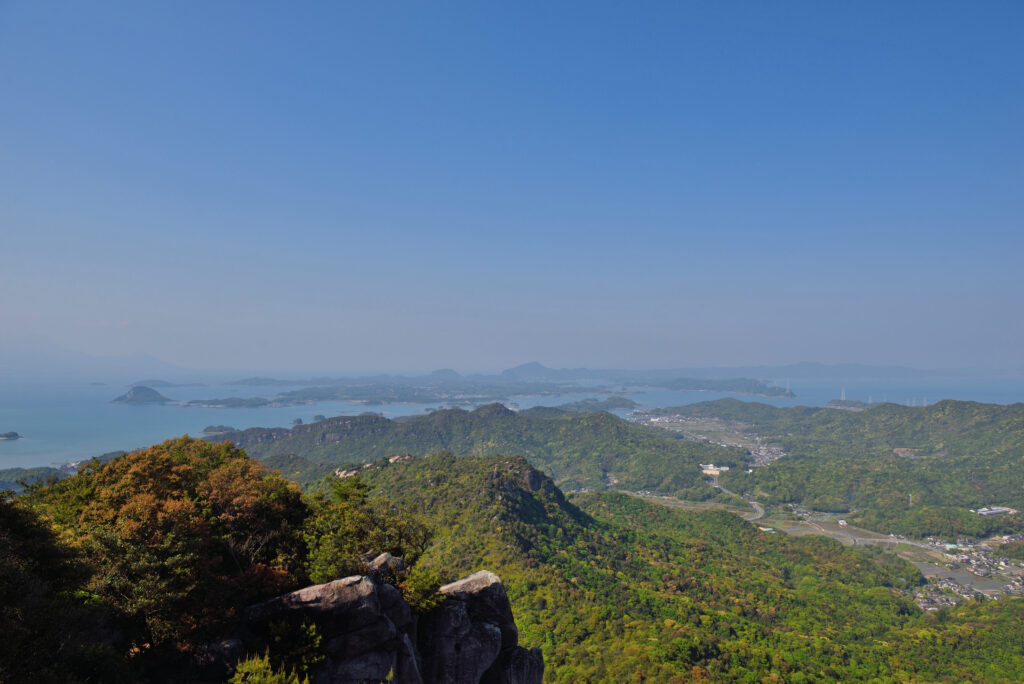
Mount Jiromaru (elevation 397m) is a sister mountain to Mount Taromaru (elevation 281m), and both are selected as one of the 100 Famous Mountains of Kyushu. From the summit, you can enjoy a 360° panoramic view stretching from Amakusa Matsushima to the Ariake Sea, Unzen, and the Yatsushiro Sea. Climbing the large exposed rock face just below Mount Jiromaru using ropes and turning around to see the magnificent view of Matsushima unfold before your eyes is an unforgettable experience.
Location: Imaizumi, Matsushima-cho, Kamiamakusa City, Kumamoto Prefecture
Ryugatake Mountaintop Natural Park
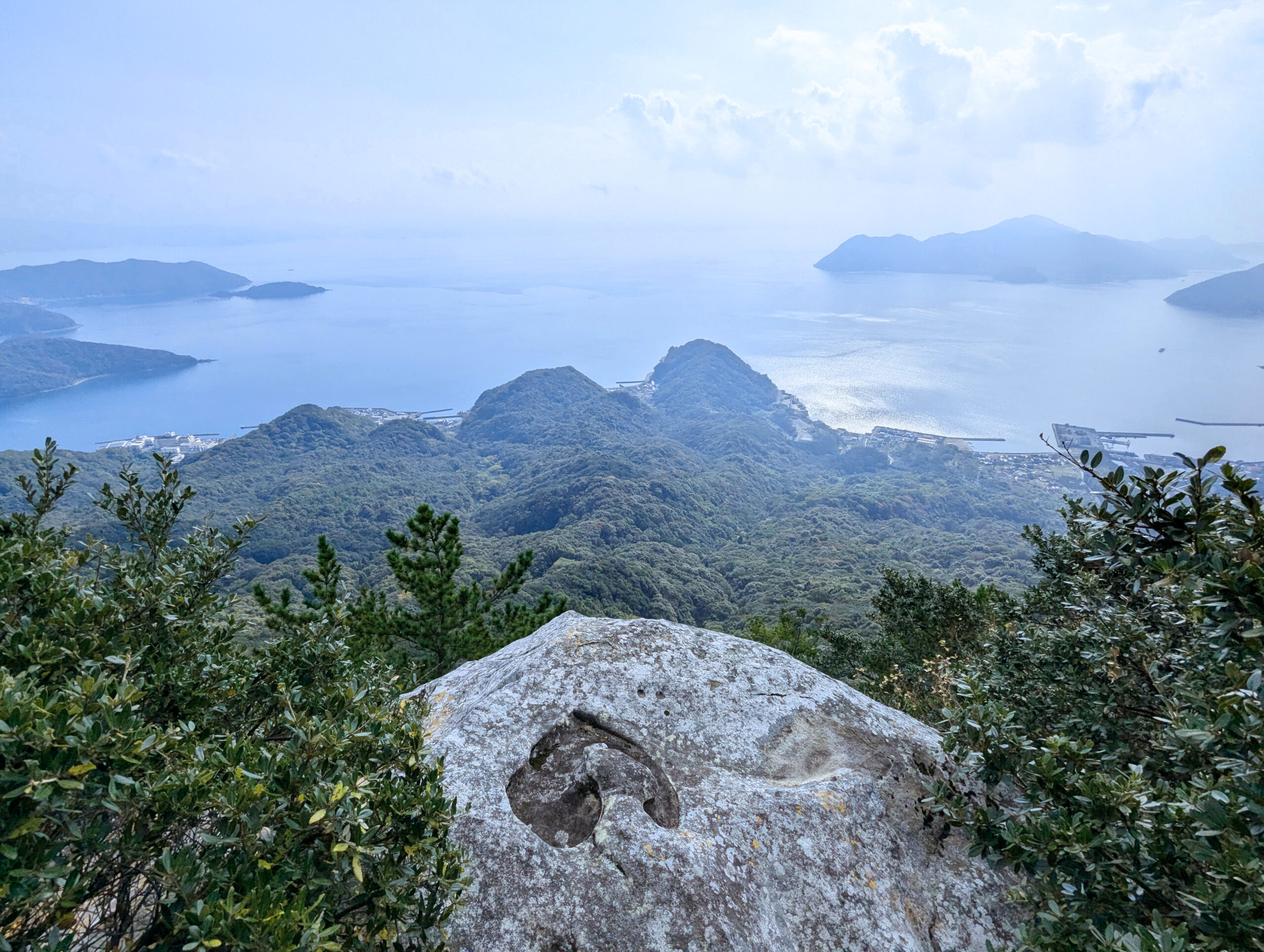
A nature park at the summit of Mt. Ryugatake (elevation 470m). On clear days, you can see as far as Aso, Unzen, and Kirishima below, and it has even been recognized as having “Japan’s most beautiful starry sky” by the Ministry of the Environment’s “Star Watching” event. Within the park is a giant rock with a heart-shaped indentation, making it a popular power spot for improving romantic luck.
Location: Omichi, Ryugatake-machi, Kamiamakusa City, Kumamoto Prefecture
